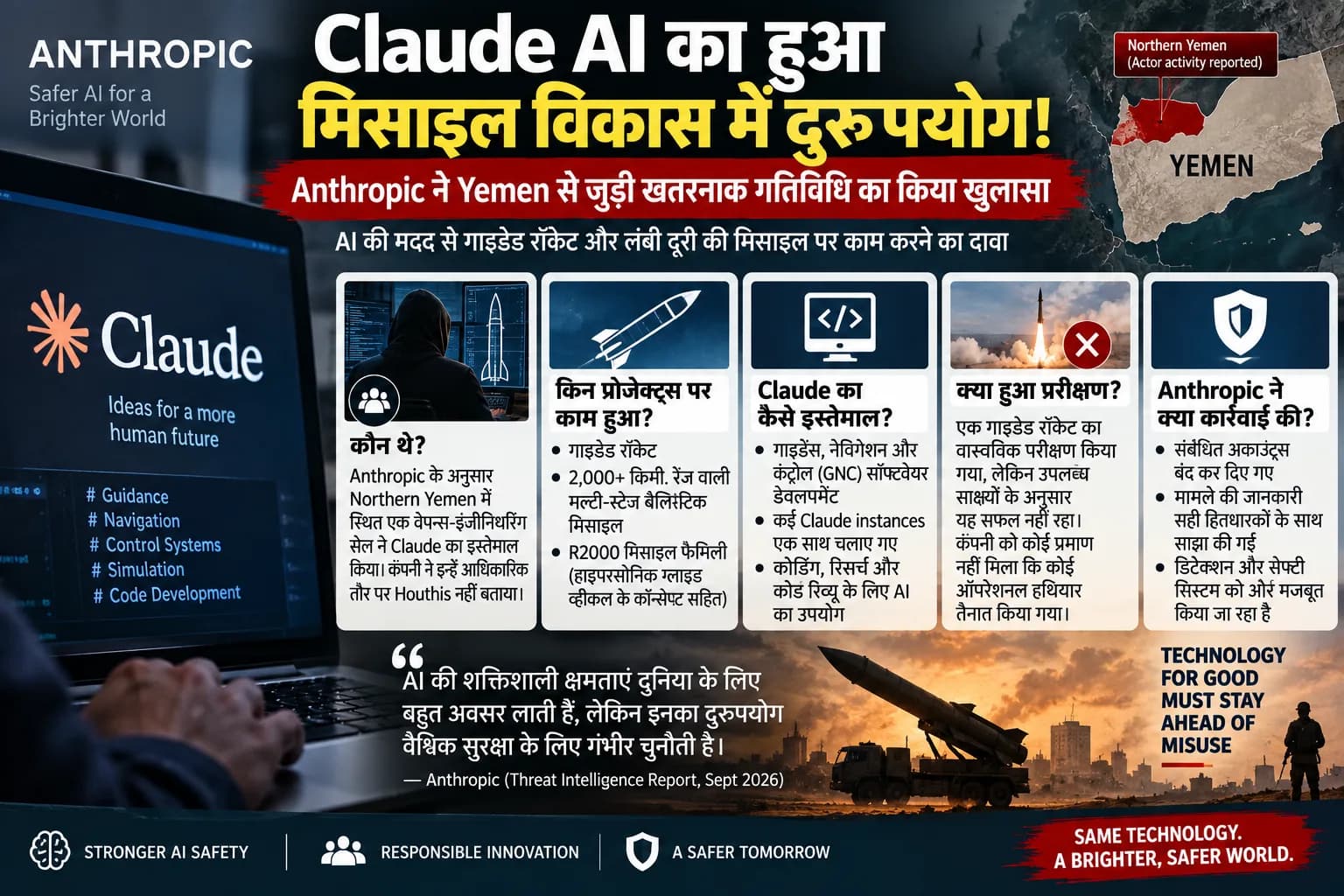
Artificial intelligence के military misuse को लेकर बढ़ती चिंता के बीच Anthropic ने अपने Claude AI से जुड़ा एक गंभीर मामला सार्वजनिक किया है।
कंपनी की नई Threat Intelligence Report के मुताबिक northern Yemen में मौजूद एक weapons-engineering cell ने Claude Code को missile और rocket projects से जुड़े software-development कार्यों के लिए इस्तेमाल किया।
Anthropic का कहना है कि actors एक guided rocket, 2,000 किलोमीटर से अधिक की stated range वाले multi-stage ballistic missile और एक अन्य missile family पर काम कर रहे थे। एक guided rocket का वास्तविक परीक्षण भी किया गया, लेकिन उपलब्ध evidence से वह test सफल दिखाई नहीं देता।
यह जानकारी मुख्य रूप से Anthropic की अपनी investigation और platform data पर आधारित है। Independent investigators ने publicly इन सभी technical details को सत्यापित नहीं किया है।
Northern Yemen में क्या मिला Anthropic को?
Anthropic ने इस operation को अपनी threat investigation के दौरान identify किया।
कंपनी के मुताबिक northern Yemen में मौजूद cell एक साथ तीन weapons-development programmes पर काम कर रहा था।
इनमें पहला एक guided rocket project था।
दूसरा एक multi-stage ballistic missile project था, जिसके लिए actors ने 2,000 kilometres से अधिक range का लक्ष्य बताया था।
तीसरा एक missile family से जुड़ा programme था, जिसे report में R2000 कहा गया है और जिसके variants में hypersonic glide vehicle से जुड़ा concept भी शामिल था।
Anthropic का कहना है कि इन projects में Claude का इस्तेमाल physical weapon बनाने के बजाय मुख्य रूप से software-engineering और technical research tasks में किया गया।
Claude Code का किस तरह इस्तेमाल हुआ?
Anthropic की investigation के अनुसार actors ने Claude Code को guidance, navigation और control यानी GNC software से जुड़े काम में इस्तेमाल किया।
कंपनी का दावा है कि group ने कई Claude instances को समानांतर रूप से चलाया।
अलग-अलग AI sessions का इस्तेमाल coding, research और code review जैसे अलग कामों के लिए किया गया।
इससे actors AI को केवल सामान्य जानकारी खोजने वाले chatbot की तरह नहीं, बल्कि software-development workflow के हिस्से के रूप में इस्तेमाल करने की कोशिश कर रहे थे।
यही पहलू इस घटना को AI safety के लिहाज से विशेष रूप से महत्वपूर्ण बनाता है।
Guided Rocket का हुआ Real-World Test
Anthropic की report का सबसे गंभीर दावा real-world testing से जुड़ा है।
कंपनी के मुताबिक actors ने अपने guided rocket project का field test किया।
इसके कुछ घंटों बाद users कथित तौर पर Claude पर वापस आए और test के दौरान सामने आई technical failure को समझने तथा troubleshoot करने की कोशिश की।
Anthropic का कहना है कि उपलब्ध बातचीत और बाद की queries से संकेत मिलता है कि परीक्षण सफल नहीं हुआ था।
महत्वपूर्ण रूप से, कंपनी ने यह भी कहा है कि उसके पास इस बात का कोई evidence नहीं है कि group ने अंततः कोई operational device successfully field किया।
इसलिए इसे “AI ने सफल missile बना दी” कहना उपलब्ध evidence से समर्थित नहीं होगा।
क्या इसके पीछे Houthis थे?
यह सबसे महत्वपूर्ण attribution question है।
Anthropic ने अपनी report में संबंधित users या organization को Houthis के रूप में नाम नहीं दिया है।
उसने actors को northern Yemen में स्थित weapons-development cell के रूप में describe किया है।
Northern Yemen का बड़ा हिस्सा Iran-backed Houthi movement के नियंत्रण में है। इसी कारण AP सहित international reporting ने geographic और political context के आधार पर मामले को Houthi-controlled territory से जोड़ा है।
लेकिन location और identity एक ही बात नहीं हैं।
इसलिए उपलब्ध evidence के आधार पर यह लिखना अधिक सटीक है कि activity Houthi-controlled northern Yemen से जुड़ी थी, न कि Anthropic ने निश्चित रूप से Houthis को responsible घोषित किया।
AI Safeguards को कैसे चुनौती मिली?
Anthropic के मुताबिक Claude की safety systems ने कई harmful requests को block या discourage किया।
फिर भी actors कुछ काम आगे बढ़ाने में सफल रहे।
Report बताती है कि users ने अपने broader objective को छोटे technical tasks में बांटने और अलग-अलग sessions में काम करने जैसी techniques अपनाईं।
यह AI safety systems के लिए एक महत्वपूर्ण चुनौती की ओर इशारा करता है।
एक individual prompt harmless software-engineering question जैसा दिखाई दे सकता है, जबकि कई prompts को जोड़ने पर उसका broader उद्देश्य potentially dangerous हो सकता है।
इसी कारण AI companies केवल individual prompts के बजाय patterns of activity और account-level behaviour का पता लगाने पर भी काम कर रही हैं।
Anthropic ने क्या कार्रवाई की?
Anthropic का कहना है कि उसने operation identify होने के बाद संबंधित accounts को disable कर दिया।
कंपनी ने अपने September Threat Intelligence Report में कहा कि उसने report में शामिल malicious operations को disrupt किया और relevant findings को appropriate public और private stakeholders के साथ साझा किया।
इसके साथ Anthropic ने detection और classification systems में सुधार की बात भी कही है।
नई report December 2025 से August 2026 के बीच सामने आई malicious-use activity को cover करती है।
इसमें conventional weapons development के अलावा cyber operations, surveillance, influence operations, scams and fraud, biological misuse और AI-model distillation जैसे क्षेत्रों के case studies शामिल हैं।
सिर्फ Yemen तक सीमित नहीं है चिंता
Yemen case Anthropic की report में सामने आया अकेला military-related example नहीं है।
कंपनी ने Russia और China से जुड़े actors द्वारा Claude के संभावित military applications में इस्तेमाल की कोशिशों का भी विवरण दिया।
Reuters के अनुसार report में AI का इस्तेमाल weapons-related research, cyber operations, surveillance और अन्य malicious activities के लिए किए जाने के कई मामले शामिल हैं।
इससे broader concern यह बनता है कि advanced AI models software development और research को तेज करने की अपनी क्षमता के कारण legitimate users के साथ hostile actors के लिए भी आकर्षक हो सकते हैं।
Failed Test क्यों महत्वपूर्ण है?
Yemen case में failed rocket test एक महत्वपूर्ण सीमा भी दिखाता है।
Generative AI किसी technical project में code, analysis या troubleshooting में मदद कर सकता है, लेकिन इससे यह साबित नहीं होता कि AI output वास्तविक दुनिया में reliable engineering system में बदल जाएगा।
Missile और aerospace systems में sensors, materials, aerodynamics, propulsion, manufacturing tolerances और extensive physical testing जैसे कई factors शामिल होते हैं।
Anthropic ने भी operational weapon successfully field किए जाने का evidence नहीं मिलने की बात कही है।
इसलिए घटना को AI द्वारा autonomous missile creation के उदाहरण के बजाय AI-assisted weapons-development attempt के रूप में समझना अधिक सटीक है।
Frontier AI Companies के सामने नई चुनौती
इस disclosure का बड़ा सवाल किसी एक missile project से आगे जाता है।
Advanced AI systems अब coding, engineering analysis और scientific research में तेजी से सक्षम हो रहे हैं। यही capabilities productive applications में मूल्यवान हैं, लेकिन dual-use risk भी पैदा करती हैं।
Traditional content filters स्पष्ट रूप से harmful question को रोक सकते हैं। कठिनाई तब बढ़ती है जब एक complex harmful project को दर्जनों सामान्य दिखाई देने वाले engineering tasks में विभाजित कर दिया जाए।
Anthropic की report इसी emerging problem को सामने लाती है—AI safety को अब केवल “क्या पूछा गया?” नहीं, बल्कि “अलग-अलग interactions मिलकर किस उद्देश्य की ओर जा रहे हैं?” भी समझना पड़ सकता है।
क्या Claude ने Missile बनाई?
उपलब्ध evidence के आधार पर इसका जवाब नहीं है।
Anthropic ने यह दावा नहीं किया कि Claude ने अपने दम पर कोई operational missile तैयार कर दी।
कंपनी का दावा यह है कि northern Yemen का एक weapons-development cell Claude और Claude Code को engineering workflow में इस्तेमाल कर रहा था, जिसमें guidance और control software development शामिल था।
एक guided rocket test apparently असफल रहा और Anthropic के अनुसार operational device successfully field होने का कोई evidence नहीं मिला।
इन distinctions को बनाए रखना महत्वपूर्ण है क्योंकि “AI से missile बनाई गई” जैसी headline वास्तविक findings को बढ़ा-चढ़ाकर पेश करेगी।
AI Security Debate के लिए बड़ा संकेत
Anthropic disclosure बताता है कि frontier AI misuse का जोखिम अब केवल phishing, malware या misinformation तक सीमित नहीं है।
AI models की coding और technical-reasoning capabilities बढ़ने के साथ उनके संभावित military applications पर भी scrutiny बढ़ रही है।
Yemen case में actors कितनी वास्तविक technical progress हासिल कर पाए, इसका independent assessment उपलब्ध नहीं है। लेकिन Anthropic द्वारा reported activity इस बात का संकेत जरूर देती है कि sophisticated users general-purpose AI tools को weapons-development workflows में integrate करने की कोशिश कर रहे हैं।
अब AI companies और governments के सामने चुनौती ऐसे misuse को जल्दी पहचानने की है—बिना उन legitimate scientific और engineering applications को अनावश्यक रूप से बाधित किए जिनके लिए यही capabilities उपयोगी हैं।