OpenAI ने जारी किए AI से तैयार सैकड़ों Mathematical Results, 722 Papers ने खींचा दुनिया का ध्यान
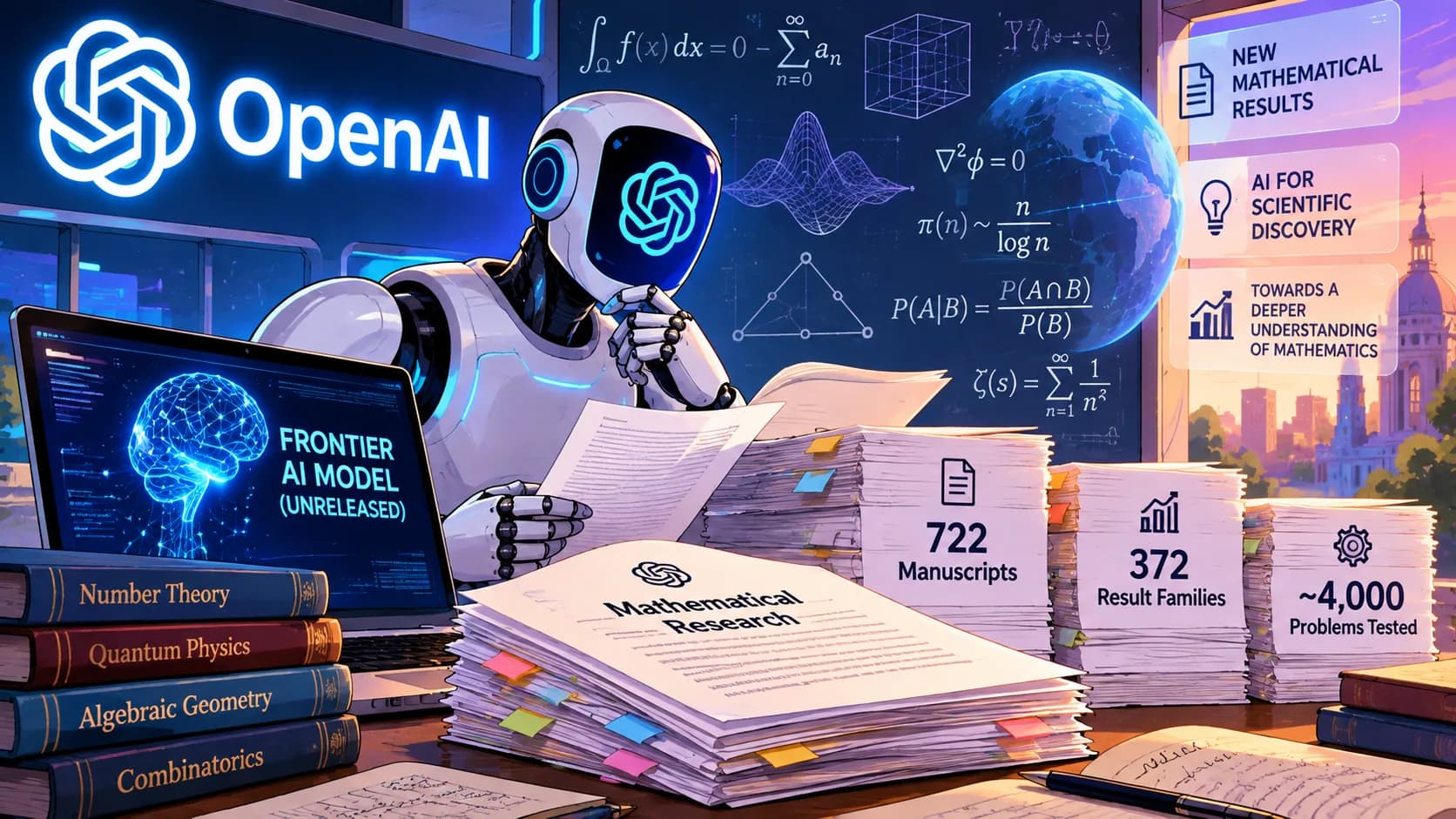
7 अक्टूबर 2026: Artificial Intelligence अब केवल गणित के सवाल हल करने वाले सहायक की भूमिका तक सीमित नहीं रह गई है। OpenAI ने 6 अक्टूबर को अपने एक unreleased internal frontier model से प्राप्त mathematical results का व्यापक संग्रह सार्वजनिक किया, जिसमें 722 manuscripts और 372 संबंधित result families शामिल हैं।
यह release इसलिए महत्वपूर्ण है क्योंकि कंपनी मॉडल को पहले से ज्ञात benchmark questions पर ही नहीं, बल्कि open research problems पर evaluate कर रही है। OpenAI के मुताबिक, मौजूदा mathematical evaluations पर performance saturate होने के बाद उसने research-level open problems पर testing का दायरा बढ़ाया।
करीब 4,000 Mathematical Problems पर मॉडल का परीक्षण
OpenAI के GitHub repository के अनुसार, evaluation के दौरान internal model के सामने लगभग 4,000 mathematical problems रखी गईं। उनमें से निकले महत्वपूर्ण outputs को व्यवस्थित करने के बाद मौजूदा catalogue में 372 result families और 722 manuscripts शामिल किए गए।
कंपनी का कहना है कि औसतन प्रत्येक result के लिए इस्तेमाल किया गया compute लगभग तीन घंटे के ChatGPT Pro thinking के बराबर था। यह आंकड़ा मॉडल द्वारा समस्या हल करने में लगे वास्तविक wall-clock time के समान समझना जरूरी नहीं है; OpenAI इसे compute estimate के रूप में प्रस्तुत कर रहा है।
किन क्षेत्रों से जुड़े हैं Results?
Repository में अलग-अलग क्षेत्रों से research problems शामिल हैं। OpenAI के catalogue में Mahler conjectures, arithmetic progressions, Kaplansky's direct-finiteness conjecture, spin glasses, quantum Heisenberg ferromagnet और relativistic Vlasov-Maxwell system जैसे विषय दिखाई देते हैं।
इससे संकेत मिलता है कि evaluation किसी एक सीमित mathematical speciality पर केंद्रित नहीं थी। मॉडल को अलग-अलग तरह की research-level mathematical reasoning पर परखा गया।
कुछ Proofs को Lean में भी किया गया Formalize
इस release की एक महत्वपूर्ण विशेषता Lean formalizations हैं। Lean एक proof assistant है जिसके जरिए mathematical proofs को machine-checkable form में प्रस्तुत और verify किया जा सकता है।
OpenAI ने कई proofs के Lean formalizations जारी किए हैं और कहा है कि उपलब्ध होने पर repository में और formalizations जोड़े जाएंगे। कंपनी ने model reasoning के 10 summaries, attempted problems से जुड़े statistics और compute estimates भी प्रकाशित किए हैं।
हालांकि यहां एक महत्वपूर्ण सावधानी जरूरी है: सभी 722 manuscripts को formally verified results समझना गलत होगा।
OpenAI का repository स्पष्ट रूप से बताता है कि collection में results verification के अलग-अलग चरणों में हैं, सभी के साथ Lean formalization मौजूद नहीं है और कुछ unformalized results में समस्याएं हो सकती हैं।
क्या AI ने वास्तव में सैकड़ों Open Problems “Solve” कर दिए?
इस headline को सावधानी से समझना जरूरी है।
OpenAI ने सितंबर में कहा था कि उसके नए internal model ने 100 से अधिक long-standing open problems resolve किए हैं। नई release में 372 result families मौजूद हैं और स्वतंत्र रिपोर्टिंग के मुताबिक इनमें सैकड़ों open questions से जुड़े solutions/results शामिल हैं।
लेकिन किसी AI-generated manuscript का प्रकाशित होना और mathematical community द्वारा किसी result को व्यापक रूप से स्वीकार किया जाना दो अलग चरण हैं। विशेषज्ञों को proofs की correctness, novelty, prior literature से संबंध और mathematical significance की जांच करनी होगी।
इसलिए फिलहाल इसे OpenAI द्वारा जारी mathematical results कहना अधिक सटीक है, बजाय इसके कि सभी 722 manuscripts को independently established breakthroughs घोषित कर दिया जाए।
Mathematical Community में उत्साह के साथ चिंता भी
इतनी बड़ी मात्रा में AI-generated mathematics जारी होना केवल technological achievement का सवाल नहीं है। इससे academic credit, verification, research priority और responsible publication जैसे मुद्दे भी सामने आए हैं।
कुछ mathematicians ने AI labs द्वारा mathematical discoveries को तेजी से प्रकाशित करने के तरीके पर चिंता जताई है। इसी व्यापक बहस के बीच OpenAI ने Institute for Advanced Study से जुड़े स्वतंत्र Advisory Group on Mathematics and Artificial Intelligence (AGMAI) से सलाह ली।
Advisory group ने AI-generated mathematical results को जिम्मेदारी से जारी करने, पर्याप्त disclosure देने और established academic practices को महत्व देने पर जोर दिया है। OpenAI का कहना है कि उसने मौजूदा release तैयार करते समय इन recommendations को ध्यान में रखा।
GitHub पर क्यों जारी किए गए Papers?
OpenAI ने manuscripts को GitHub repository में रखा है, जहां paper revisions और citations के लिए protocols बनाए गए हैं। कंपनी community-hosted alternatives की भी तलाश कर रही है।
इस approach का एक फायदा यह है कि researchers सामग्री को तुरंत पढ़ और जांच सकते हैं। दूसरी तरफ, इतनी बड़ी संख्या में manuscripts को एक साथ verify करना mathematical community के लिए स्वयं एक चुनौती बन सकता है।
OpenAI ने भविष्य की releases में citations, mathematical exposition और presentation की quality सुधारने की प्रतिबद्धता भी जताई है।
यह AI के भविष्य के लिए क्यों महत्वपूर्ण है?
Frontier AI systems की क्षमताओं को अक्सर coding, standardized benchmarks और general reasoning tests से मापा जाता रहा है। लेकिन genuinely open mathematical research problems अलग चुनौती पेश करते हैं—यहां उत्तर पहले से benchmark dataset में मौजूद होना जरूरी नहीं है और किसी proof को विशेषज्ञ scrutiny से गुजरना पड़ता है।
अगर इस collection के महत्वपूर्ण हिस्से स्वतंत्र verification में सही और genuinely novel साबित होते हैं, तो यह संकेत देगा कि frontier AI systems scientific discovery के लिए अधिक शक्तिशाली research tools बन सकते हैं।
इसके संभावित प्रभाव mathematics से आगे physics, theoretical computer science और दूसरे research-heavy क्षेत्रों तक जा सकते हैं। लेकिन इसका वास्तविक महत्व manuscripts की संख्या से नहीं, बल्कि आने वाले महीनों में होने वाली independent verification और scholarly assessment से तय होगा।
अभी Model सार्वजनिक नहीं किया गया है
इन results को तैयार करने वाला frontier model अभी publicly released नहीं है। OpenAI का कहना है कि वह उस model को responsibly release करने पर काम कर रहा है। कंपनी का तर्क है कि internal frontier models को mathematics और अन्य sciences पर evaluate करना advanced scientific tools विकसित करने के लिए महत्वपूर्ण है।
इसलिए मौजूदा घोषणा को दो अलग चीजों के रूप में समझना चाहिए: mathematical results सार्वजनिक हो गए हैं, लेकिन उन्हें पैदा करने वाला frontier model अभी सार्वजनिक रूप से उपलब्ध नहीं है।
निष्कर्ष
OpenAI की 722 manuscripts वाली release AI और mathematics के संबंध में एक असामान्य रूप से बड़ा प्रयोग है। संख्या प्रभावशाली है, लेकिन सबसे महत्वपूर्ण सवाल अब यह नहीं है कि AI ने कितने papers तैयार किए—बल्कि यह है कि उनमें से कितने results सही, नए, महत्वपूर्ण और स्वतंत्र जांच में टिकाऊ साबित होते हैं।
यही प्रक्रिया तय करेगी कि यह release केवल frontier-model capability का प्रदर्शन है या mathematical research के काम करने के तरीके में किसी बड़े बदलाव का शुरुआती संकेत।