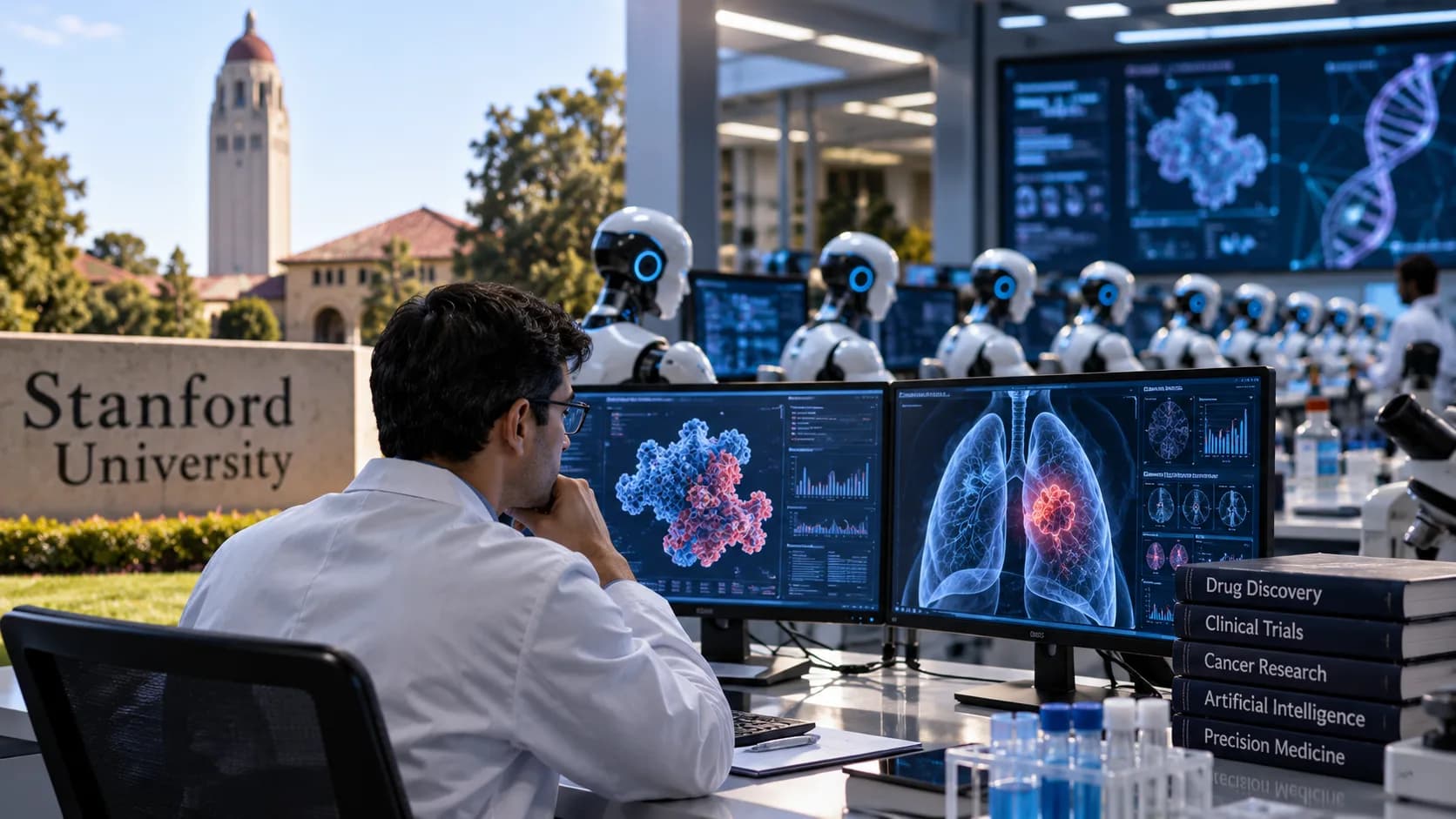
क्या हजारों AI agents मिलकर एक पूरी biotechnology research organisation की तरह काम कर सकते हैं?
Stanford Medicine के James Zou, PhD, graduate student Harrison Zhang और उनके सहयोगियों का नया research project इसी सवाल का परीक्षण करता है। Researchers ने Virtual Biotech नाम का एक multi-agent AI framework तैयार किया है, जिसमें अलग-अलग scientific roles निभाने वाले AI agents drug discovery और development से जुड़े complex tasks को आपस में बांटकर पूरा करते हैं।
इस system का सबसे बड़ा demonstration scale चौंकाने वाला है। Researchers ने 37,075 clinical-trialist agents को parallel में deploy किया। पूरे framework ने 55,984 clinical trials से जुड़े outcomes का analysis किया और हजारों trials की high-throughput processing कुछ ही घंटों में पूरी की।
लेकिन इस research का महत्व केवल “37,000 AI agents” की संख्या में नहीं है। ज्यादा महत्वपूर्ण यह है कि researchers ने agents को एक organisation की तरह structure किया—जहां एक virtual Chief Scientific Officer काम बांटता है, specialised scientist agents अलग-अलग evidence की जांच करते हैं और एक reviewing layer findings की quality का मूल्यांकन करती है।
क्या है Stanford का ‘Virtual Biotech’?
Virtual Biotech को researchers ने एक traditional biotechnology R&D organisation की digital counterpart की तरह design किया है।
इसके शीर्ष पर एक virtual Chief Scientific Officer (CSO) है। यह scientific question को छोटे tasks में तोड़ता है और उन्हें specialised scientist agents को देता है। अलग-अलग agents target biology, human genetics, single-cell biology, functional genomics और clinical trials जैसे क्षेत्रों में काम करते हैं।
Core architecture में चार scientific divisions, आठ specialised scientist agents और CSO office के तीन additional agents हैं। इनके पास 100 से अधिक customised tools उपलब्ध हैं, जिनसे वे biomedical databases और analytical resources के साथ काम कर सकते हैं।
37,000 का आंकड़ा system में हमेशा मौजूद स्थायी “employees” की संख्या नहीं समझना चाहिए। बड़े clinical-trial analysis के लिए researchers ने 37,075 dedicated agents parallel में बनाए और deploy किए, ताकि प्रत्येक agent एक specific trial पर केंद्रित होकर काम कर सके।
55,984 Clinical Trials का Analysis
Drug development की सबसे कठिन समस्याओं में यह अनुमान लगाना शामिल है कि कौन-सा drug candidate clinical trials में सफल होने की अधिक संभावना रखता है।
Virtual Biotech को इसी समस्या पर लगाया गया।
Researchers के मुताबिक system ने 55,984 clinical trials के outcomes को analyse और annotate किया। High-throughput curation के दौरान 37,075 agents को Phase II और Phase III trials से outcome information निकालने के लिए parallel में इस्तेमाल किया गया।
Agents ने ClinicalTrials.gov से शुरुआत की। जहां जानकारी अधूरी थी, वहां PubMed publications और फिर press releases तथा regulatory announcements जैसे अतिरिक्त sources की जांच की गई।
Stanford Medicine ने इसे लगभग 50,000 trials को एक सप्ताह से कम समय में catalog और analyse करने के रूप में वर्णित किया है। Detailed research paper के अनुसार 37,075-trial high-throughput extraction workload को parallel system ने लगभग 6 घंटे में process किया।
Single Agent को लगते 76 दिन, AI Swarm ने करीब 6 घंटे में किया काम
Research paper में parallelisation का असर भी quantify किया गया है।
Researchers के अनुसार, अगर वही 37,075 trials एक single agent से sequentially process कराए जाते, तो estimated runtime लगभग 1,839 घंटे या 76.6 दिन होता।
Parallel multi-agent architecture ने इसे लगभग 6 घंटे में process किया—paper इसे करीब 184-fold speedup बताता है।
यह comparison human researchers और AI के बीच सीधे productivity comparison के बजाय single-agent बनाम massively parallel multi-agent computation का comparison है। इसलिए इसे “AI ने इंसानों से 184 गुना तेजी से research की” कहना उपलब्ध evidence से अधिक व्यापक दावा होगा।
AI Agents ने Drug Success के बारे में क्या खोजा?
Trial analysis के दौरान Virtual Biotech ने drug targets की दो biological characteristics पर ध्यान दिया।
पहली थी cell-type specificity—यानी कोई drug target किसी खास cell type पर कितना केंद्रित है। दूसरी थी bimodality, जो broadly यह बताती है कि किसी gene की activity अलग-अलग cells में gradual “dimmer” की तरह है या ज्यादा स्पष्ट “on/off switch” जैसा pattern दिखाती है।
Researchers ने पाया कि cell-type-specific और switch-like genes को target करने वाले drugs के clinical outcomes बेहतर थे।
उनके analysis में ऐसे targets से जुड़े drugs:
Phase I से Phase II तक पहुंचने की संभावना में 40% अधिक थे,
market तक पहुंचने की संभावना में 48% अधिक थे,
और उनके साथ 32% कम adverse events जुड़े थे।
ये associations cancers के अलावा brain, heart, kidney और lung conditions सहित विभिन्न disease areas में भी दिखाई दिए।
महत्वपूर्ण रूप से, ये observational associations हैं; इन्हें अपने-आप यह प्रमाण नहीं माना जाना चाहिए कि यही biological characteristics बेहतर outcomes का कारण हैं।
James Zou: “This Could Help the Entire Drug Discovery Industry”
Stanford के associate professor of biomedical data science James Zou ने findings को लेकर कहा:
“The science the agents discovered is really exciting.”
उन्होंने कहा कि single-cell features का इस्तेमाल बेहतर drugs विकसित करने में मदद कर सकता है और इससे इस तरह का biological data collect करने का महत्व सामने आता है।
Zou के मुताबिक, “This could help the entire drug discovery industry.”
Research team ने इसके बाद एक और कठिन सवाल की ओर रुख किया—क्या यही AI organisation किसी संभावित treatment strategy को भी design कर सकती है?
Lung Cancer के लिए AI ने B7-H3 को बनाया Target
Researchers ने Virtual Biotech को B7-H3 नाम के protein पर काम करने के लिए कहा, जिसे cancer researchers पहले से संभावित therapeutic target के रूप में देख रहे थे।
Agents ने अलग-अलग studies और biomedical datasets का analysis किया और पाया कि lung tumours के आसपास मौजूद fibroblasts में B7-H3 का expression अधिक था।
Further analysis ने researchers को यह hypothesis बनाने की दिशा दी कि B7-H3-expressing fibroblasts nearby immune cells की activity को suppress करने में भूमिका निभा सकते हैं।
इसके बाद AI agents ने B7-H3-targeting antibody-drug conjugate (ADC) strategy प्रस्तावित की। ADC broadly ऐसा treatment approach है जिसमें antibody किसी specific target वाले cells तक drug payload पहुंचाने का काम करती है।
AI को केवल January 2025 से पहले का Data दिया गया
इस experiment में researchers ने एक महत्वपूर्ण safeguard इस्तेमाल किया।
Virtual Biotech की drug-design analysis को January 2025 से पहले उपलब्ध information तक सीमित रखा गया। इसका उद्देश्य यह जांचना था कि system बाद की pharmaceutical developments को देखकर answer reproduce तो नहीं कर रहा।
इसके महीनों बाद, अगस्त 2025 में एक established pharmaceutical company ने स्वतंत्र रूप से B7-H3 के खिलाफ समान antibody-drug conjugate strategy विकसित की। Stanford के अनुसार उस therapy को बाद में U.S. Food and Drug Administration से Breakthrough Therapy designation मिला।
Zou ने इसे Virtual Biotech द्वारा प्रस्तावित therapeutic design के साथ consistent एक independent third-party validation बताया।
यहां एक महत्वपूर्ण distinction है: इसका अर्थ यह नहीं है कि Stanford के AI agents द्वारा स्वयं बनाया गया कोई drug FDA-approved हो गया। Stanford की report के मुताबिक दूसरी pharmaceutical company ने independently समान strategy विकसित की थी।
क्या 37,000 AI Scientists अब इंसानों की जगह ले सकते हैं?
अभी उपलब्ध evidence ऐसा निष्कर्ष नहीं देता।
Virtual Biotech मुख्य रूप से computational research—database searches, evidence synthesis, statistical analysis, target identification और therapeutic hypotheses—को बड़े scale पर automate करता है।
लेकिन किसी AI-generated hypothesis को वास्तविक medicine बनाने के लिए laboratory experiments, preclinical testing, clinical trials, regulatory review और human scientific oversight की जरूरत बनी रहती है।
Zou ने भी इस सीमा को स्पष्ट किया है। उनके मुताबिक humans, physical experimentation और validation ही वह माध्यम बने रहेंगे जिनसे AI discoveries वास्तविक दुनिया में प्रभाव डाल सकती हैं।
उनकी टीम अब Virtual Biotech द्वारा खोजे गए अन्य candidate targets को वास्तविक laboratories में test करने की योजना बना रही है।
Research Science में Published
Virtual Biotech पर paper 17 सितंबर 2026 को journal Science में प्रकाशित हुआ। Stanford Medicine के मुताबिक Harrison Zhang इसके lead author और James Zou senior author हैं।
Project को Knight-Hennessy Scholarship, National Institutes of Health, National Science Foundation और Chan Zuckerberg Biohub से funding/support मिला। Stanford Department of Biomedical Data Science ने भी research को support किया और PHD Biosciences के researchers ने study में योगदान दिया।
Virtual Biotech क्यों महत्वपूर्ण है?
इस research का सबसे महत्वपूर्ण पहलू केवल LLM का biomedical questions के जवाब देना नहीं, बल्कि AI agents को एक scientific organisation की तरह coordinate करना है।
एक agent हर काम करने की कोशिश करने के बजाय system अलग-अलग specialised agents को parallel tasks देता है। इससे बहुत बड़े datasets और हजारों clinical trials पर एक साथ काम करना संभव हुआ।
फिर भी असली परीक्षा अब शुरू होती है: Virtual Biotech से निकले नए targets और hypotheses में से कितने controlled laboratory experiments और बाद के clinical research में टिकते हैं।
यही तय करेगा कि tens of thousands of coordinated AI agents drug discovery के लिए केवल तेज data-analysis infrastructure साबित होते हैं या वास्तव में नई therapies खोजने की प्रक्रिया को materially बदल सकते हैं।