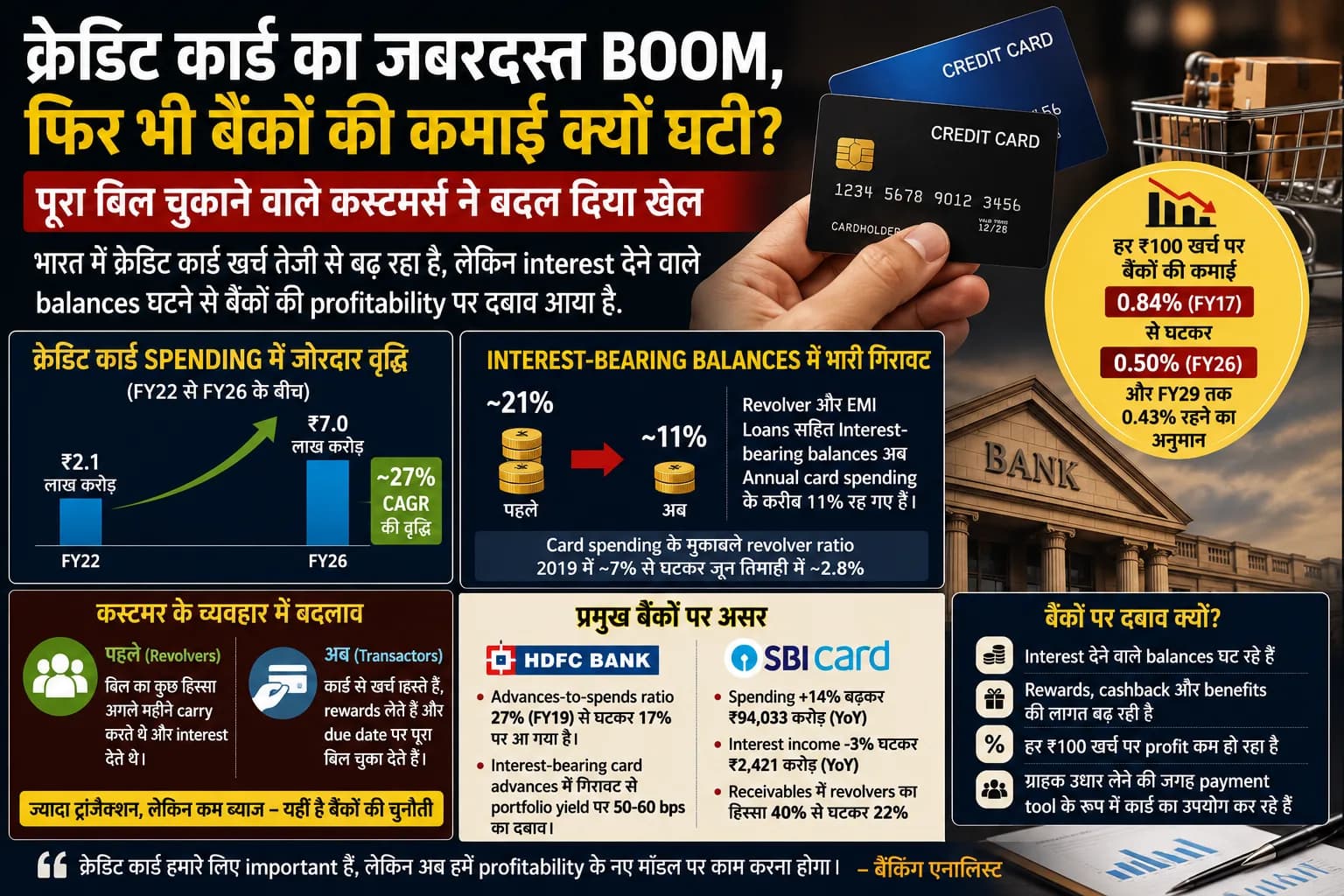
Credit Card Boom के बीच Banks के सामने नई परेशानी
भारत में credit cards का इस्तेमाल तेजी से बढ़ रहा है। Consumers shopping, travel, dining, e-commerce और रोजमर्रा के payments के लिए cards का अधिक उपयोग कर रहे हैं।
पहली नजर में यह banks के लिए अच्छी खबर लगती है।
लेकिन credit-card business के अंदर एक महत्वपूर्ण बदलाव हो रहा है—spending बढ़ रही है, लेकिन उससे मिलने वाला profit उसी गति से नहीं बढ़ रहा।
इसकी सबसे बड़ी वजह भारतीय customers के payment behaviour में आया बदलाव है।
बड़ी संख्या में cardholders अब credit card को short-term loan की तरह इस्तेमाल करने के बजाय payment और rewards instrument की तरह इस्तेमाल कर रहे हैं।
वे card से खर्च करते हैं, rewards या benefits लेते हैं और due date आने पर पूरा outstanding चुका देते हैं।
Banks के लिए यही financial behaviour नई profitability challenge पैदा कर रहा है।
कौन होते हैं ‘Revolvers’ और Banks के लिए क्यों महत्वपूर्ण हैं?
Credit-card industry में broadly दो तरह के customers को समझना जरूरी है।
पहले हैं Transactors—ऐसे cardholders जो हर महीने अपना पूरा outstanding चुका देते हैं।
दूसरे हैं Revolvers—ऐसे customers जो पूरा bill चुकाने के बजाय कुछ balance अगले billing cycle में carry forward करते हैं और उस outstanding पर interest देते हैं।
Historically, revolvers credit-card issuers के लिए बहुत महत्वपूर्ण रहे हैं क्योंकि इन balances पर मिलने वाला interest card business के सबसे profitable revenue sources में शामिल होता है।
अब यही हिस्सा कम हो रहा है।
Interest-Bearing Balances 21% से घटकर करीब 11%
Industry estimates के मुताबिक, revolver outstanding और EMI loans सहित interest-bearing card balances अब annual card spending के करीब 11% रह गए हैं।
कुछ साल पहले यह अनुपात करीब 21% था।
दूसरी तरफ credit-card spending में जोरदार growth हुई है।
FY2021-22 से FY2025-26 के बीच card spending ने करीब 27% compound annual growth rate (CAGR) दर्ज की।
यानी भारतीय ज्यादा card transactions कर रहे हैं, लेकिन उस spending का छोटा हिस्सा ऐसा है जिससे banks को ब्याज मिल रहा है।
यही credit-card boom का profitability paradox है।
Revolver Ratio में भी बड़ी गिरावट
Bernstein के estimates के मुताबिक, card spending के मुकाबले revolver balances का ratio जून तिमाही में करीब 2.8% रह गया।
2019 में यह करीब 7% था।
इसका मतलब यह नहीं है कि credit-card business unprofitable हो गया है।
इसका अर्थ यह है कि हर ₹100 के card spending से मिलने वाली profit economics पहले जैसी नहीं रही।
Customers ऐसा क्यों कर रहे हैं?
इस बदलाव के पीछे financial awareness के साथ दूसरे borrowing alternatives की उपलब्धता भी एक कारण हो सकती है।
Credit-card outstanding को revolve करना consumer के लिए महंगा पड़ सकता है क्योंकि unpaid balances पर comparatively high interest rates लग सकती हैं।
अगर customer के पास personal loan, EMI conversion या दूसरे comparatively cheaper borrowing alternatives उपलब्ध हैं, तो लंबे समय तक card balance carry करना कम आकर्षक हो सकता है।
इसके अलावा digitally savvy customers credit cards को cashback, reward points, airline miles और discounts हासिल करने के लिए इस्तेमाल कर सकते हैं और interest लगने से पहले पूरा bill चुका देते हैं।
Customer के लिए यह financially disciplined behaviour है।
लेकिन issuer के लिए इसका मतलब कम interest income हो सकता है।
HDFC Bank पर कैसे दिख रहा असर?
इस बदलाव का असर बड़े credit-card issuers पर दिखाई देने लगा है।
HDFC Bank का credit-card advances-to-spends ratio करीब 17% रह गया है।
FY2018-19 में यह करीब 27% था।
Interest-bearing card advances में गिरावट से HDFC Bank के overall portfolio yield पर करीब 50-60 basis points का प्रभाव पड़ने का अनुमान लगाया गया है।
इसके अलावा credit cards का बैंक के total loan book में हिस्सा भी करीब 6% से घटकर लगभग 4% रह गया है।
हालांकि इसमें केवल customer behaviour ही कारण नहीं है। HDFC Ltd merger, RBI द्वारा पहले लगाया गया temporary card issuance embargo और industry-wide card spending moderation जैसे दूसरे factors भी शामिल रहे हैं।
SBI Cards: Spending 14% बढ़ी, Interest Income 3% घटी
SBI Cards के आंकड़े इस बदलती economics को और स्पष्ट करते हैं।
June quarter में SBI Cards के cards पर retail spending सालाना आधार पर 14% बढ़कर ₹94,033 करोड़ पहुंच गई।
लेकिन receivables केवल 3% बढ़कर ₹58,269 करोड़ रहे।
Interest-earning assets receivables का करीब 55% थे, जबकि revolvers का हिस्सा करीब 22% रहा।
इसी अवधि में interest income करीब 3% घटकर ₹2,421 करोड़ रह गई।
यह contrast महत्वपूर्ण है:
Spending +14%
लेकिन
Interest Income -3%
यानी transaction activity और interest profitability अब एक ही दिशा में नहीं चल रही हैं।
SBI Cards में Revolvers 40% से घटकर 22%
बदलाव को longer-term perspective से देखें तो तस्वीर और स्पष्ट होती है।
मार्च 2020 में SBI Cards के receivables में revolvers का हिस्सा करीब 40% था।
अब यह करीब 22% है।
EMI loans को शामिल करने के बाद interest-earning receivables का हिस्सा भी एक साल पहले के 60% से घटकर करीब 55% रह गया है।
हालांकि SBI Cards management ने संकेत दिया है कि revolver rate में लगातार आ रही गिरावट अब स्थिर हो सकती है।
कंपनी EMI conversions बढ़ाने पर भी काम कर रही है ताकि interest-earning assets का हिस्सा बेहतर किया जा सके।
हर ₹100 Spending पर Banks की कमाई कितनी घटी?
Bernstein का एक और estimate credit-card economics में बदलाव की गंभीरता दिखाता है।
Credit-card spending की प्रत्येक unit पर generated profit FY2016-17 में करीब 0.84% था।
FY2025-26 तक यह घटकर करीब 0.50% रह गया।
Bernstein का अनुमान है कि FY2028-29 तक यह और घटकर करीब 0.43% रह सकता है।
यह projection है, guaranteed outcome नहीं। वास्तविक profitability interest rates, defaults, interchange income, rewards costs और customer behaviour सहित कई factors पर निर्भर करेगी।
Banks सिर्फ Interest से पैसा नहीं कमाते
Credit-card business की profitability को केवल revolvers से जोड़ना भी पूरी तस्वीर नहीं है।
Banks और card issuers कई sources से revenue कमाते हैं:
Interest income — outstanding balance carry करने वाले customers से।
Interchange income — card transaction process होने पर merchant ecosystem से मिलने वाली fee।
Annual और joining fees — कुछ cards पर customers से ली जाने वाली membership fees।
EMI income — purchases को instalments में convert करने से।
Late-payment और अन्य charges — applicable परिस्थितियों में लगने वाली fees।
इसलिए spending बढ़ना अभी भी banks के लिए valuable है क्योंकि उससे interchange revenue मिल सकता है।
समस्या यह है कि payment-only customer से मिलने वाला revenue उस customer से कम हो सकता है जो interest-bearing balance रखता है।
Rewards और Cashback भी बढ़ाते हैं Cost
Credit-card market में competition बढ़ने से issuers को customers आकर्षित करने और बनाए रखने के लिए rewards देने पड़ते हैं।
Cashback, lounge access, airline miles, hotel benefits, discount offers और reward points card adoption बढ़ा सकते हैं।
लेकिन ये benefits issuer के लिए cost भी हैं।
इसलिए यदि कोई customer बड़े पैमाने पर card spend करता है, rewards लेता है और हर महीने पूरा outstanding चुका देता है, तो bank को उस customer से interest income नहीं मिलती।
Issuer को interchange और दूसरे revenue sources के जरिए उस relationship को profitable बनाना पड़ता है।
क्या इसका मतलब Banks Credit Cards देना कम कर देंगे?
जरूरी नहीं।
Credit card किसी bank के लिए केवल interest-earning loan product नहीं है।
Card customer के spending behaviour और broader financial relationship से भी जुड़ा होता है।
एक active credit-card customer बाद में bank के savings account, personal loan, home loan, investment, insurance या wealth-management products का ग्राहक भी बन सकता है।
इसलिए banks card profitability को केवल standalone interest income के आधार पर नहीं देखते।
लेकिन अगर revolver balances structurally कम रहते हैं, तो issuers को pricing, rewards और customer acquisition strategy बदलनी पड़ सकती है।
Customers के लिए यह Trend अच्छा क्यों हो सकता है?
Banks की profitability के लिए revolver decline चुनौती है, लेकिन consumers के नजरिए से यह जरूरी नहीं कि बुरी खबर हो।
अगर ज्यादा लोग हर महीने पूरा credit-card bill चुका रहे हैं, तो इसका अर्थ है कि वे expensive revolving interest से बच रहे हैं।
Financially disciplined card usage में सामान्यतः पूरा statement balance due date तक चुकाना शामिल होता है।
इसलिए banks के लिए profitability problem पैदा करने वाला behaviour वास्तव में कई customers के लिए बेहतर financial discipline का संकेत हो सकता है।
आगे क्या बदल सकता है?
अगर interest-paying customers का हिस्सा कम रहता है, तो Indian credit-card market की अगली लड़ाई केवल “किस bank के पास ज्यादा cards हैं” पर नहीं होगी।
Banks को यह देखना होगा कि कौन-से customers economically valuable हैं और उन्हें कितनी rewards subsidy देना sustainable है।
इसका असर भविष्य में कई क्षेत्रों पर पड़ सकता है:
Premium card fees, cashback structures, reward-point values, lounge-access rules, EMI offers और customer eligibility.
Issuers profitable customers को ज्यादा targeted offers दे सकते हैं और low-margin segments में benefits को rationalise कर सकते हैं।
Credit Card Boom का नया अर्थ
भारत का credit-card market अभी भी तेजी से विकसित हो रहा है।
लेकिन तेजी से बढ़ती spending और तेजी से बढ़ता profit एक ही चीज नहीं हैं।
आज का भारतीय consumer card को borrowing product से ज्यादा payment, convenience और rewards product के रूप में इस्तेमाल करने लगा है।
यही बदलाव banks के सामने नया सवाल खड़ा कर रहा है:
अगर customer ज्यादा खर्च करे, लेकिन interest न दे—तो उस customer से sustainable profit कैसे कमाया जाए?
भारत के अगले चरण के credit-card boom का फैसला शायद cards की संख्या से कम और इसी सवाल के जवाब से ज्यादा होगा।