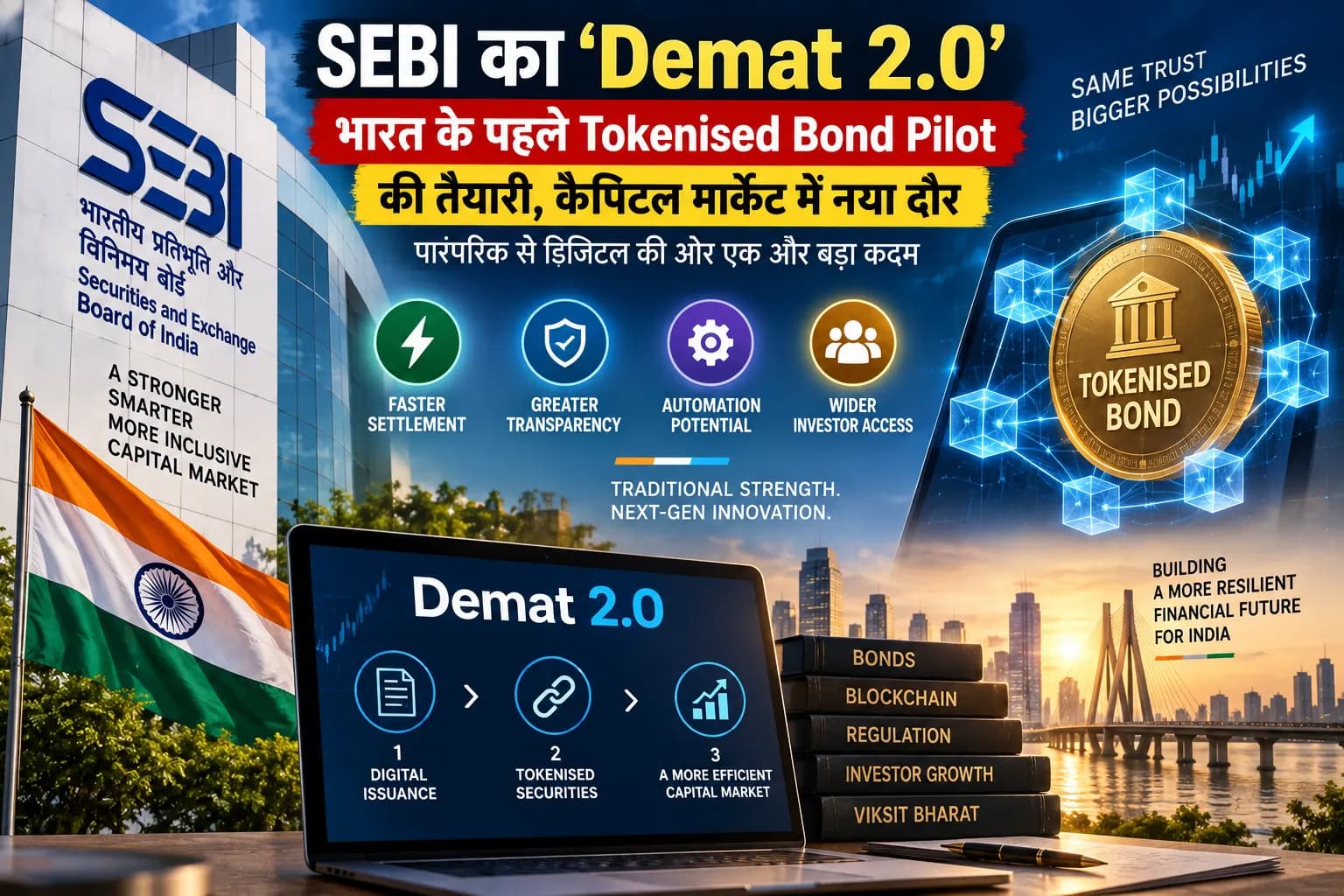
मुंबई: भारत का पूंजी बाजार एक नए तकनीकी प्रयोग की ओर बढ़ रहा है। Securities and Exchange Board of India यानी SEBI से जुड़ी ‘Demat 2.0’ पहल के तहत देश के पहले tokenised bond pilot की तैयारी की खबर सामने आई है।
यह प्रयोग पारंपरिक securities infrastructure और blockchain या distributed-ledger आधारित tokenisation के बीच संभावित तालमेल को जांचने की दिशा में महत्वपूर्ण कदम हो सकता है।
सरल शब्दों में, किसी bond को tokenise करने का मतलब उस security से जुड़े अधिकारों या ownership representation को डिजिटल token के रूप में दर्ज करना हो सकता है। लेकिन इसका अर्थ यह नहीं है कि पारंपरिक demat system तुरंत खत्म होने वाला है।
पायलट का उद्देश्य नई व्यवस्था की तकनीकी, परिचालन और नियामकीय व्यवहार्यता को जांचना होगा। व्यापक बाजार में इसका इस्तेमाल परीक्षण के परिणाम और SEBI के आगे के फैसलों पर निर्भर करेगा।
क्या है ‘Demat 2.0’?
भारत में dematerialisation ने शेयर और अन्य securities को physical certificates से electronic holdings में बदलकर capital market infrastructure में बड़ा परिवर्तन किया था।
अब ‘Demat 2.0’ नाम से सामने आ रही पहल securities ownership और settlement infrastructure के अगले संभावित डिजिटल चरण की ओर इशारा करती है।
Tokenisation में किसी financial asset को blockchain या किसी दूसरे distributed ledger पर digital token के जरिए represent किया जा सकता है।
लेकिन यहां एक महत्वपूर्ण अंतर समझना जरूरी है।
Tokenised bond कोई cryptocurrency नहीं है।
Underlying asset एक bond ही रहता है। Token उस bond से जुड़े ownership या contractual rights का digital representation हो सकता है। इसकी कानूनी प्रकृति और निवेशकों के अधिकार लागू securities regulations तथा pilot के design से तय होंगे।
भारत का पहला Tokenised Bond Pilot क्यों है महत्वपूर्ण?
यदि प्रस्तावित प्रयोग नियामकीय ढांचे के तहत आगे बढ़ता है, तो यह भारत में regulated securities की tokenisation को वास्तविक market infrastructure में जांचने का अवसर देगा।
इसमें यह देखा जा सकता है कि tokenised securities को:
कैसे issue किया जाए,
ownership records कैसे maintain हों,
transfer किस तरह हो,
settlement कैसे पूरा हो,
investor verification कैसे हो,
और मौजूदा securities regulations के साथ नई technology कैसे काम करे।
Pilot होने का मतलब यही है कि technology को सीमित और नियंत्रित वातावरण में परखा जाएगा।
इसलिए इसे अभी पूरे भारतीय bond market में tokenisation लागू होने के बराबर नहीं समझना चाहिए।
Tokenised Bond कैसे काम कर सकता है?
एक सामान्य bond में investor issuer को पैसा देता है और बदले में तय शर्तों के अनुसार interest तथा maturity पर principal repayment का अधिकार प्राप्त करता है।
Tokenisation में इसी financial instrument का digital representation तैयार किया जा सकता है।
उदाहरण के तौर पर, यदि किसी bond issue को डिजिटल tokens में represent किया जाए तो प्रत्येक token underlying security में निर्धारित अधिकार का प्रतिनिधित्व कर सकता है।
इसके बाद ownership और transfers का record distributed ledger infrastructure पर maintain किया जा सकता है।
लेकिन वास्तविक व्यवस्था इससे कहीं अधिक जटिल होती है।
इसमें issuer, depository, stock exchange, clearing corporation, custodian, broker, bank और regulator जैसे विभिन्न संस्थानों की भूमिकाओं को स्पष्ट करना जरूरी होगा।
क्या खत्म हो जाएगा मौजूदा Demat Account?
नहीं, ऐसी कोई धारणा फिलहाल नहीं बनाई जानी चाहिए।
Tokenised bond pilot का अर्थ यह नहीं है कि मौजूदा demat accounts, NSDL-CDSL infrastructure या वर्तमान securities settlement system को तत्काल बदल दिया जाएगा।
भारत का मौजूदा securities infrastructure बड़े पैमाने पर काम करता है और करोड़ों निवेशक demat ecosystem से जुड़े हैं।
किसी नई technology को अपनाने से पहले regulator को यह देखना होगा कि वह मौजूदा infrastructure के साथ कैसे integrate होती है और उससे वास्तव में क्या लाभ मिलता है।
इसीलिए ‘Demat 2.0’ को मौजूदा demat व्यवस्था के तत्काल replacement के बजाय संभावित अगली technological layer या experiment के रूप में समझना अधिक उचित होगा।
Tokenisation के संभावित फायदे क्या हैं?
Tokenisation के समर्थक इसके कई संभावित फायदे बताते हैं।
1. Faster Settlement
Distributed ledger के इस्तेमाल से ownership transfer और settlement processes के कुछ हिस्सों को अधिक automated बनाने की संभावना हो सकती है।
हालांकि इससे settlement वास्तव में कितना तेज होगा, यह pilot के architecture पर निर्भर करेगा।
2. बेहतर Transparency
एक controlled ledger पर transactions का structured record market participants और regulator के लिए बेहतर audit trail उपलब्ध करा सकता है।
3. Automation
Smart contracts का उपयोग कुछ corporate actions, payment instructions या compliance processes को automate करने के लिए किया जा सकता है—यदि नियामकीय framework इसकी अनुमति देता है।
4. Fractionalisation की संभावना
Tokenisation theoretically किसी asset को छोटे digital units में represent करने की सुविधा दे सकती है।
लेकिन भारतीय bond pilot में fractional ownership की अनुमति होगी या नहीं, यह pilot के नियमों पर निर्भर करेगा। इसे अभी confirmed feature नहीं माना जाना चाहिए।
क्या Tokenised Bonds से छोटे निवेशकों को फायदा होगा?
यह इस पहल से जुड़ा सबसे दिलचस्प सवाल हो सकता है।
यदि भविष्य में tokenisation transaction costs कम करने, minimum investment size घटाने या bond market तक पहुंच आसान करने में सक्षम होती है, तो retail participation के लिए अवसर बढ़ सकते हैं।
लेकिन यह संभावना है, वर्तमान पायलट का स्थापित परिणाम नहीं।
Retail investors को वास्तविक फायदा तभी होगा जब नई व्यवस्था सुरक्षित, सरल, पर्याप्त liquidity वाली और लागत के लिहाज से मौजूदा विकल्पों से बेहतर साबित हो।
Blockchain का इस्तेमाल मतलब Crypto नहीं
Tokenisation की खबरों में blockchain और cryptocurrency को एक ही चीज समझने की गलती अक्सर होती है।
Blockchain या distributed ledger एक technology है। Cryptocurrency उसका एक application है।
Tokenised securities में blockchain जैसी technology का इस्तेमाल किया जा सकता है, लेकिन underlying instrument फिर भी regulated financial security हो सकता है।
यही अंतर SEBI जैसे regulator के लिए महत्वपूर्ण है।
Tokenised bond पर securities laws, KYC, AML requirements, investor protection और दूसरे applicable regulations लागू हो सकते हैं।
इसलिए इसे Bitcoin या किसी unregulated crypto token की तरह देखना सही नहीं होगा।
भारत के Bond Market के लिए क्या बदल सकता है?
भारत लंबे समय से corporate bond market को अधिक गहरा और liquid बनाने की कोशिश कर रहा है।
Banks के अलावा bond market कंपनियों को सीधे investors से debt capital जुटाने का विकल्प देता है।
अगर tokenisation issuance, trading या settlement की friction कम करने में सफल होती है, तो लंबे समय में bond-market infrastructure को फायदा हो सकता है।
लेकिन technology अकेले liquidity पैदा नहीं कर सकती।
Liquidity के लिए issuers, institutional investors, retail participation, market makers, transparent pricing और मजबूत secondary market की भी जरूरत होती है।
यही वजह है कि tokenisation को bond market की हर समस्या का automatic solution नहीं माना जाना चाहिए।
निवेशकों के लिए कौन से जोखिम महत्वपूर्ण होंगे?
नई technology के साथ नए प्रकार के operational risks भी सामने आते हैं।
सबसे महत्वपूर्ण सवालों में शामिल हो सकते हैं:
Cybersecurity: Digital infrastructure को hacking और unauthorized access से सुरक्षित कैसे रखा जाएगा?
Private Keys और Access: यदि token ownership cryptographic credentials से जुड़ी है, तो access खोने की स्थिति में investor protection कैसे काम करेगा?
Legal Finality: Blockchain record और legally recognised ownership record के बीच संबंध क्या होगा?
Interoperability: नई व्यवस्था existing exchanges, depositories और banking infrastructure से कैसे जुड़ेगी?
Privacy: Transparent ledger और investor data protection के बीच संतुलन कैसे बनाया जाएगा?
Smart Contract Risk: Automated code में गलती होने पर responsibility और dispute resolution कैसे तय होगा?
Pilot का महत्व इसलिए भी है क्योंकि regulator इन समस्याओं को बड़े स्तर पर implementation से पहले समझ सकता है।
SEBI के लिए Regulatory Challenge
भारत का securities market अत्यधिक regulated ecosystem है।
इसमें सिर्फ technology को काम करना पर्याप्त नहीं है। हर transaction के साथ investor protection, ownership verification, taxation, settlement finality, KYC और dispute resolution जैसी कानूनी जरूरतें जुड़ी होती हैं।
SEBI के सामने चुनौती होगी कि tokenisation से मिलने वाली संभावित efficiency को इन safeguards के साथ संतुलित किया जाए।
यदि प्रयोग सफल होता है, तो भविष्य में regulator अन्य securities में भी tokenisation की उपयोगिता का मूल्यांकन कर सकता है।
हालांकि ऐसी किसी expansion को अभी निश्चित नहीं माना जाना चाहिए।
‘Demat 2.0’ का असली टेस्ट क्या होगा?
नई technology का असली मूल्य इस बात से तय नहीं होगा कि वह blockchain इस्तेमाल करती है या नहीं।
महत्वपूर्ण सवाल होगा:
क्या इससे भारतीय capital market मौजूदा व्यवस्था की तुलना में ज्यादा सुरक्षित, सस्ता, तेज और सुलभ बनता है?
भारत पहले ही securities settlement के मामले में दुनिया के तेजी से विकसित होते markets में शामिल रहा है। इसलिए किसी नए infrastructure को मौजूदा व्यवस्था की efficiency से मुकाबला करना होगा।
Tokenised bond pilot इसी सवाल का शुरुआती जवाब खोज सकता है।
आगे क्या देखना होगा?
अब बाजार की नजर pilot से जुड़ी विस्तृत regulatory और operational जानकारी पर रहेगी।
विशेष रूप से यह स्पष्ट होना महत्वपूर्ण होगा कि:
कौन सा bond tokenise किया जाएगा, issuer कौन होगा, pilot में कौन-कौन से market institutions शामिल होंगे, निवेशकों की eligibility क्या होगी, token किस infrastructure पर जारी होंगे और settlement किस तरीके से होगा।
इसी तरह pilot की शुरुआत की तारीख और उसके बाद commercial rollout की संभावित प्रक्रिया भी महत्वपूर्ण होगी।
जब तक इन विवरणों की आधिकारिक पुष्टि नहीं होती, व्यापक tokenised securities rollout की समयसीमा को लेकर अनुमान लगाने से बचना चाहिए।
निष्कर्ष
‘Demat 2.0’ और भारत के पहले tokenised bond pilot की तैयारी securities market के digital evolution में एक दिलचस्प प्रयोग हो सकती है।
पहले dematerialisation ने physical share certificates को electronic holdings में बदला था। Tokenisation अब ownership और settlement infrastructure को एक और technological layer देने की संभावना पेश करता है।
लेकिन किसी technology का नया होना उसकी सफलता की गारंटी नहीं है।
SEBI के लिए असली परीक्षा यह होगी कि tokenisation से मिलने वाली संभावित efficiency को investor protection, cybersecurity, legal certainty और मौजूदा market infrastructure के साथ कितनी प्रभावी तरीके से जोड़ा जा सकता है।
इसलिए फिलहाल इसे भारतीय demat system का replacement नहीं, बल्कि उसके संभावित अगले चरण को परखने वाला प्रयोग समझना ज्यादा उचित होगा।