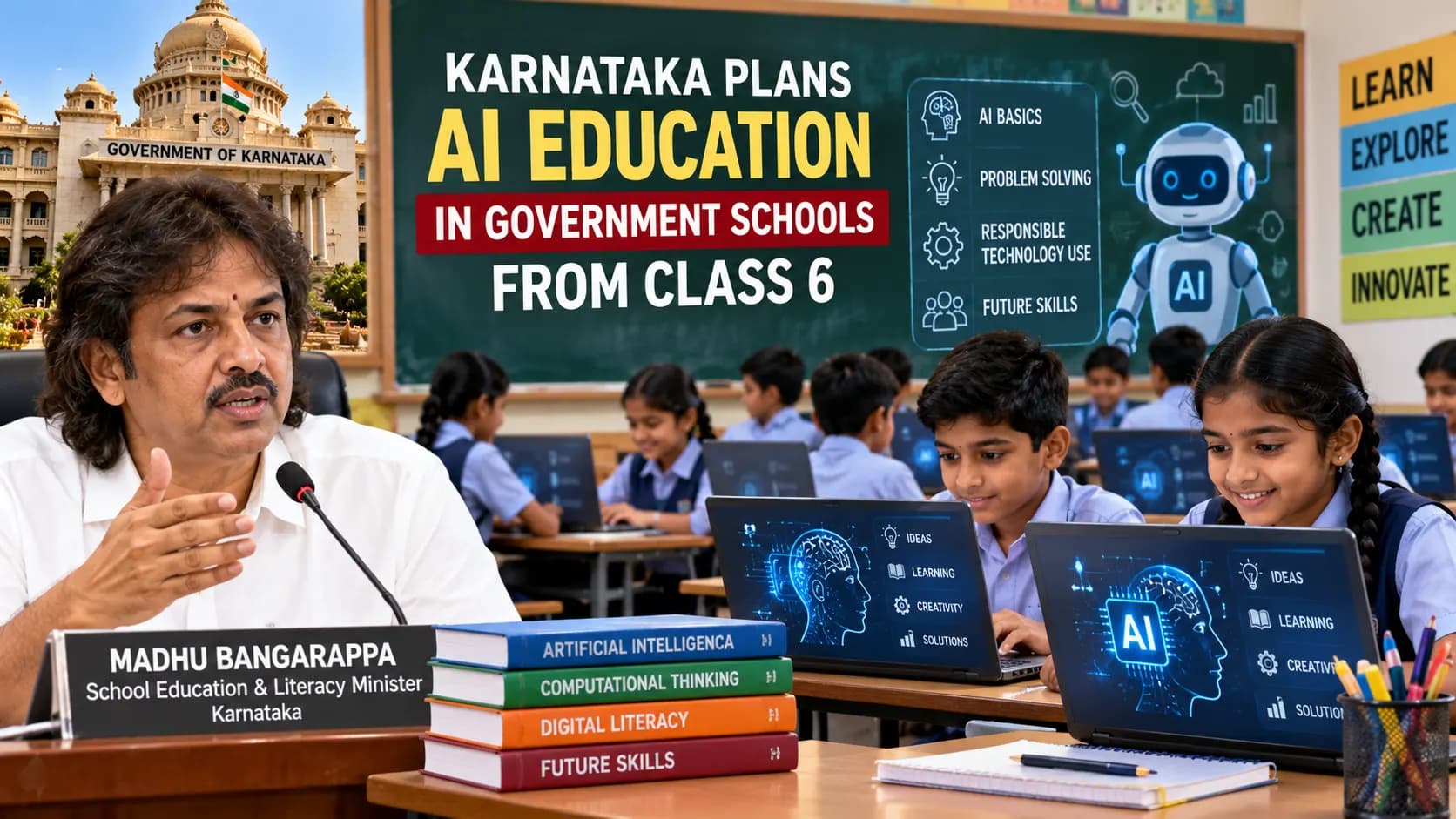
Class 6 से AI पढ़ाने की क्या है योजना?
Karnataka सरकार सरकारी स्कूलों के विद्यार्थियों के लिए technology education का दायरा बढ़ाने पर विचार कर रही है।
राज्य के School Education and Literacy Minister Madhu Bangarappa ने कहा है कि सरकार छठी कक्षा से Artificial Intelligence को school education का हिस्सा बनाने की दिशा में काम कर रही है।
इस पहल का उद्देश्य केवल students को AI tools इस्तेमाल करना सिखाना नहीं, बल्कि उन्हें यह समझ देना भी है कि Artificial Intelligence क्या है, इसका इस्तेमाल कैसे होता है और भविष्य की पढ़ाई तथा jobs में technology की भूमिका किस तरह बदल सकती है।
हालांकि प्रस्ताव की विस्तृत academic structure अभी सामने आनी बाकी है। इसलिए इसे इस समय पूर्ण रूप से लागू हो चुकी policy के बजाय सरकार की planned education initiative के रूप में देखना अधिक सही होगा।
Karnataka ने Class 6 को क्यों चुना?
Middle-school level वह समय होता है जब students basic mathematics, science, logical reasoning और digital concepts की अधिक structured understanding विकसित करना शुरू करते हैं।
Class 6 से AI का introduction देने का उद्देश्य बच्चों को advanced programming या complex machine-learning mathematics पढ़ाना जरूरी नहीं होगा। शुरुआती स्तर पर curriculum AI की basic concepts, computational thinking, responsible technology use और problem-solving जैसे क्षेत्रों पर केंद्रित किया जा सकता है।
लेकिन curriculum में वास्तव में कौन-से topics शामिल होंगे, इसकी अंतिम जानकारी सरकार के detailed syllabus जारी करने के बाद ही स्पष्ट होगी।
Coding से आगे बढ़कर AI पर Focus
पिछले कुछ वर्षों में school-level digital education में coding और computer literacy पर जोर बढ़ा है। Generative AI के तेजी से बढ़ते इस्तेमाल ने अब education systems के सामने नया सवाल खड़ा किया है—क्या students को AI केवल इस्तेमाल करना चाहिए, या यह भी समझना चाहिए कि यह कैसे काम करता है और इसकी सीमाएं क्या हैं?
Karnataka की प्रस्तावित पहल इसी बदलाव की ओर इशारा करती है।
अगर curriculum अच्छी तरह तैयार किया जाता है, तो AI education में सिर्फ prompts लिखना या chatbot इस्तेमाल करना ही नहीं, बल्कि data, algorithms, automation, AI-generated content की पहचान और responsible use जैसे concepts भी शामिल किए जा सकते हैं।
यहां यह स्पष्ट करना जरूरी है कि ये संभावित educational approaches हैं; final Karnataka curriculum की पुष्टि होने तक इन्हें निर्धारित syllabus नहीं माना जाना चाहिए।
Government Schools पर Focus क्यों महत्वपूर्ण है?
इस योजना का सबसे महत्वपूर्ण पहलू इसका government-school students पर केंद्रित होना है।
Private schools में computers, coding classes और technology-based learning resources की उपलब्धता अपेक्षाकृत अधिक हो सकती है। इसके विपरीत government-school system में infrastructure और access अलग-अलग क्षेत्रों में काफी भिन्न हो सकते हैं।
अगर AI education केवल उन students तक सीमित रहती है जिनके पास पहले से laptops, high-speed internet और paid learning platforms उपलब्ध हैं, तो नई technology existing digital divide को और बढ़ा सकती है।
Government schools में इसे उपलब्ध कराने का उद्देश्य उस अंतर को कम करने में मदद कर सकता है—बशर्ते schools को आवश्यक resources भी दिए जाएं।
Teacher Training होगी सबसे बड़ी चुनौती
AI syllabus तैयार करना इस योजना का केवल पहला हिस्सा होगा।
असल चुनौती हजारों teachers को नए subject के लिए तैयार करने की होगी।
Artificial Intelligence तेजी से बदलने वाली technology है। इसलिए teachers को केवल एक बार training देकर curriculum लागू करना पर्याप्त नहीं हो सकता। उन्हें नियमित professional development, updated teaching material और practical classroom resources की आवश्यकता होगी।
एक teacher को यह भी समझना होगा कि AI-generated information हमेशा सही नहीं होती, models bias दिखा सकते हैं और students को generated content को बिना verification के स्वीकार नहीं करना चाहिए।
इसलिए successful AI education में teacher training उतनी ही महत्वपूर्ण होगी जितना syllabus।
Computers और Internet की उपलब्धता भी अहम
AI education का दूसरा बड़ा सवाल infrastructure है।
अगर किसी school में पर्याप्त computers, reliable electricity या internet connectivity नहीं है, तो practical AI learning सीमित हो सकती है।
Karnataka के Bengaluru जैसे technology hubs और दूरदराज के rural schools की resources समान नहीं हैं। इसलिए statewide programme की सफलता इस बात पर निर्भर करेगी कि technology access केवल कुछ urban schools तक सीमित न रहे।
Government को curriculum rollout के साथ devices, computer labs, connectivity और maintenance जैसे operational issues पर भी ध्यान देना होगा।
Bengaluru का Tech Ecosystem दे सकता है फायदा
Karnataka की एक बड़ी ताकत उसका technology ecosystem है।
Bengaluru भारत के सबसे बड़े technology और startup hubs में शामिल है, जहां global technology companies, startups, research institutions और engineering talent की बड़ी मौजूदगी है।
इस ecosystem का उपयोग teacher training, curriculum development, practical workshops और industry exposure के लिए किया जा सकता है।
लेकिन industry participation के साथ safeguards भी जरूरी होंगे। Government-school education का curriculum commercial product promotion या किसी एक technology platform पर अत्यधिक निर्भर नहीं होना चाहिए।
AI Literacy सिर्फ Coding नहीं है
AI education को केवल coding subject समझना इसकी उपयोगिता को सीमित कर सकता है।
Students के लिए AI literacy में यह समझना भी जरूरी होगा कि:
AI-generated answer गलत हो सकता है।
Deepfake और manipulated media कैसे पहचाने जाएं।
Personal information AI platforms पर डालने के क्या privacy risks हैं।
AI-generated schoolwork और plagiarism के बीच क्या अंतर है।
Algorithms में bias कैसे पैदा हो सकता है।
किसी AI answer को reliable source से verify क्यों करना चाहिए।
इस तरह की digital literacy आने वाले वर्षों में traditional computer education जितनी ही महत्वपूर्ण हो सकती है।
Students को क्या फायदा हो सकता है?
अगर programme प्रभावी तरीके से लागू होता है, तो Class 6 से AI exposure students में logical thinking, problem-solving, digital literacy और technology awareness विकसित करने में मदद कर सकता है।
कम उम्र में technology की foundational understanding मिलने से आगे चलकर computer science, engineering, data science, robotics और दूसरे technology-related क्षेत्रों को समझना आसान हो सकता है।
लेकिन AI education का उद्देश्य हर बच्चे को AI engineer बनाना नहीं होना चाहिए।
School education का व्यापक लक्ष्य students को technology का informed, critical और responsible user बनाना होना चाहिए।
AI के इस्तेमाल के साथ Risks भी समझाने होंगे
Artificial Intelligence के opportunities के साथ कई risks भी जुड़े हैं।
Generative AI tools गलत या fabricated information दे सकते हैं। बच्चों की personal data privacy भी महत्वपूर्ण मुद्दा है। इसके अलावा AI पर अत्यधिक निर्भरता independent thinking और original schoolwork को प्रभावित कर सकती है।
इसलिए Class 6 जैसे relatively young age group के लिए AI curriculum तैयार करते समय online safety, privacy, misinformation, copyright और ethical use को core components बनाना महत्वपूर्ण होगा।
केवल technology का इस्तेमाल सिखाना पर्याप्त नहीं होगा; उसके limitations को समझाना भी जरूरी है।
क्या AI Teachers की जगह लेगा?
ऐसी initiatives के साथ अक्सर यह सवाल उठता है कि क्या AI eventually teachers की जगह ले सकता है।
School education में AI का अधिक realistic role teacher replacement के बजाय support tool का है। इसका इस्तेमाल personalised practice, translation, learning exercises और lesson preparation जैसे क्षेत्रों में किया जा सकता है।
लेकिन classroom में बच्चों की social development, motivation, judgement और individual needs को समझने में human teachers की भूमिका अलग है।
इसलिए AI education और AI-assisted teaching को teacher replacement के रूप में पेश करना उचित नहीं होगा।
Karnataka की योजना क्यों महत्वपूर्ण है?
India में AI skills की demand तेजी से बढ़ रही है, लेकिन future workforce की तैयारी केवल universities या engineering colleges से शुरू नहीं होती।
School level पर foundational exposure students को यह समझने में मदद कर सकता है कि technology केवल entertainment या social media का माध्यम नहीं, बल्कि problem-solving और innovation का tool भी है।
Karnataka का प्रस्ताव खास तौर पर इसलिए महत्वपूर्ण है क्योंकि इसका focus government schools पर है। अगर implementation inclusive रहता है, तो यह advanced technology education को उन students तक पहुंचा सकता है जिन्हें private technology programmes तक आसानी से access नहीं मिलता।
सबसे बड़ा सवाल—Implementation
Policy announcement और classroom implementation के बीच अक्सर बड़ा अंतर होता है।
Karnataka की AI education initiative की वास्तविक सफलता को चार प्रमुख क्षेत्रों से मापा जा सकेगा: curriculum की quality, teachers की training, schools में infrastructure और rural-urban access में समानता।
अगर केवल syllabus में “AI” नाम का chapter जोड़ दिया जाता है लेकिन students को practical learning का अवसर नहीं मिलता, तो initiative का प्रभाव सीमित रहेगा।
इसके विपरीत अगर government structured curriculum, trained teachers, adequate devices और responsible-AI education उपलब्ध कराती है, तो यह government-school digital education में महत्वपूर्ण बदलाव बन सकता है।
Balanced Analysis
Karnataka का Class 6 से AI education शुरू करने का प्रस्ताव भविष्य की skills को school curriculum से जोड़ने की दिशा में महत्वपूर्ण कदम हो सकता है। खास तौर पर government schools को target करना digital opportunity gap कम करने की क्षमता रखता है।
लेकिन AI को curriculum में शामिल करना अपने आप educational transformation की guarantee नहीं है।
सबसे बड़ी परीक्षा implementation होगी। Bengaluru के well-equipped school और rural Karnataka के resource-constrained school को समान learning opportunity देना आसान नहीं होगा। Teachers को लगातार training देना, age-appropriate syllabus बनाना और children's data privacy सुनिश्चित करना भी जरूरी होगा।
इसके अलावा बच्चों को AI के outputs पर निर्भर बनाने के बजाय critical thinking और verification सिखाना programme का केंद्रीय उद्देश्य होना चाहिए।
इसलिए अभी सबसे सटीक निष्कर्ष यह है: Karnataka सरकार Class 6 से government-school students को AI education देने की योजना बना रही है, लेकिन इस initiative की वास्तविक सफलता curriculum से ज्यादा उसके classroom-level execution पर निर्भर करेगी।