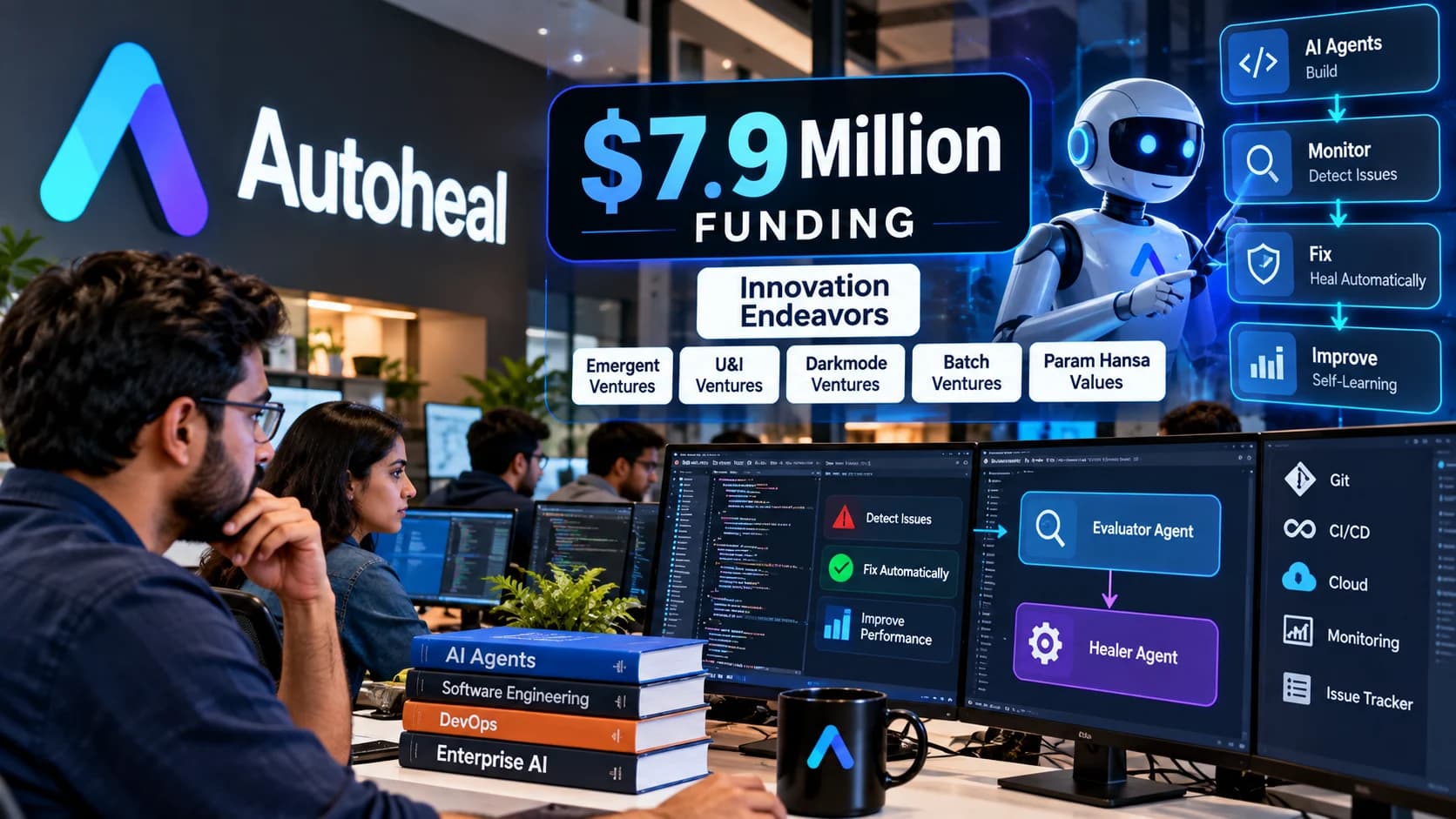
$7.9 मिलियन की Seed Funding
Autoheal ने अपने seed funding round में $7.9 million जुटाने की घोषणा की है।
इस round का नेतृत्व Innovation Endeavors ने किया, जबकि Emergent Ventures, U&I Ventures, Darkmode Ventures, Batch Ventures और Param Hansa Values ने भी भाग लिया। Innovation Endeavors के Harpinder Singh कंपनी के board में शामिल होंगे।
कंपनी इस पूंजी का इस्तेमाल अपने AI-powered software factory platform को आगे बढ़ाने और enterprise engineering teams के लिए उसकी क्षमताओं को विस्तार देने में करना चाहती है।
Autoheal आखिर बनाता क्या है?
AI coding tools developers को तेजी से code तैयार करने में मदद कर सकते हैं, लेकिन code लिखने के बाद भी कई महत्वपूर्ण काम बाकी रहते हैं।
Production incidents की जांच, security vulnerabilities को ठीक करना, software systems की निगरानी और AI model costs को नियंत्रित करना इनमें शामिल हैं।
Autoheal इसी post-coding workload को AI agents के जरिए automate करने की कोशिश कर रहा है। इसका platform coding agents, code repositories, CI/CD systems, observability tools, cloud environments और issue trackers को एक साझा engineering context से जोड़ता है।
'Evaluator' और 'Healer' Agents कैसे काम करते हैं?
Autoheal की technology में दो विशेष AI agents महत्वपूर्ण भूमिका निभाते हैं—Evaluator और Healer।
Evaluator agent दूसरे worker agents के काम को जांचता और score करता है। इसके लिए code-review comments, CI failures और production incidents जैसे signals का इस्तेमाल किया जा सकता है।
अगर किसी worker agent का performance कमजोर पाया जाता है, तो Healer agent उसके prompts, tools, skills या model selection में बदलाव प्रस्तावित कर सकता है।
महत्वपूर्ण रूप से, कंपनी के अनुसार ये बदलाव सीधे अनियंत्रित तरीके से production में लागू नहीं होते। वे Git में version-controlled रहते हैं और engineer की approval आवश्यक होती है।
AI Agent को सुधारने वाला AI Agent
यही Autoheal के business model का सबसे दिलचस्प हिस्सा है।
पहली लहर के enterprise AI tools मुख्य रूप से कर्मचारियों के काम को automate करने पर केंद्रित थी। Autoheal एक अलग समस्या पर काम कर रहा है—AI agents के अपने performance को कैसे manage और improve किया जाए।
इसका अर्थ है कि एक AI agent software-engineering task कर सकता है, जबकि दूसरा agent उसके परिणाम की जांच करता है और तीसरा स्तर उसके व्यवहार को सुधारने के लिए बदलाव सुझा सकता है।
हालांकि, यह model कितना प्रभावी और scalable साबित होगा, इसका व्यापक मूल्यांकन enterprise deployments बढ़ने के साथ ही संभव होगा।
Nomura और AvidXchange में इस्तेमाल
Autoheal का कहना है कि उसका platform पहले से regulated और complex enterprise environments में इस्तेमाल किया जा रहा है।
कंपनी ने Nomura और AvidXchange को अपने ग्राहकों में शामिल बताया है। Autoheal के अनुसार, इन deployments में technology का इस्तेमाल incident investigation और engineering workloads को तेजी से संभालने के लिए किया जा रहा है। autoheal.ai
इन performance improvements को फिलहाल कंपनी और उसके ग्राहकों द्वारा बताए गए परिणाम के रूप में देखना उचित है।
Autoheal के पीछे कौन हैं?
कंपनी की founding team में Sid Choudhury (CEO), Utkarsh Ohm (CTO) और Puneet Saraswat (CDO) शामिल हैं।
टीम के सदस्यों का पिछला अनुभव Harness, Microsoft Azure, ThoughtSpot और AppDynamics जैसे enterprise software और cloud businesses से जुड़ा रहा है।
Autoheal का कहना है कि enterprise engineering platforms पर काम करने के इसी अनुभव से उन्हें AI agents को बड़े संगठनों में सुरक्षित और नियंत्रित तरीके से deploy करने की समस्या पर काम करने का विचार मिला।
Funding का इस्तेमाल कहां होगा?
Autoheal अपने platform को scale करने के साथ reinforcement-learning capabilities और enterprise-specific intelligence पर काम करने की योजना बना रहा है।
कंपनी का दीर्घकालिक लक्ष्य customer के private engineering data के आधार पर छोटे private models तैयार करना भी है।
Software engineering के बाद कंपनी इसी architecture को data engineering और security engineering तक विस्तारित करने की संभावना देख रही है।
यह Funding क्यों महत्वपूर्ण है?
Generative AI के शुरुआती दौर में ज्यादा ध्यान ऐसे models और assistants पर था जो code लिख सकते थे।
अब enterprise market में अगली चुनौती सामने आ रही है: जब कंपनियां बड़ी संख्या में AI agents deploy करेंगी, तो उनकी reliability, security, permissions, costs और performance को कौन नियंत्रित करेगा?
Autoheal इसी emerging infrastructure layer में अपनी जगह बनाने की कोशिश कर रहा है।
अगर enterprise software development में AI agents का इस्तेमाल तेजी से बढ़ता है, तो agents को monitor और govern करने वाले platforms की मांग भी बढ़ सकती है।
लेकिन चुनौतियां भी कम नहीं
Self-improving AI agents का विचार आकर्षक है, लेकिन enterprise environment में reliability और accountability महत्वपूर्ण सवाल बने रहेंगे।
किसी agent द्वारा गलत diagnosis या बदलाव सुझाने से production systems प्रभावित हो सकते हैं। Sensitive corporate data तक AI systems की पहुंच privacy और security concerns भी पैदा करती है।
Autoheal engineer approval, private-cloud deployment, access controls और auditability के जरिए इन जोखिमों को नियंत्रित करने की बात करता है।
फिर भी, बड़े पैमाने पर इसकी effectiveness इस बात पर निर्भर करेगी कि technology वास्तविक enterprise environments में कितनी consistent, secure और cost-effective साबित होती है।
संतुलित विश्लेषण
$7.9 million का seed round दिखाता है कि निवेशक केवल code-generating AI में ही नहीं, बल्कि AI agents को manage करने वाली infrastructure layer में भी अवसर देख रहे हैं।
Autoheal का approach खास इसलिए है क्योंकि वह इंसानों को पूरी तरह हटाने के बजाय AI agents के ऊपर evaluation और governance की अतिरिक्त layer बनाने की कोशिश करता है।
लेकिन funding मिलना technology की सफलता की गारंटी नहीं है। Autoheal को यह साबित करना होगा कि उसका self-improving model अलग-अलग enterprise environments में measurable improvements दे सकता है और automation बढ़ाते हुए सुरक्षा तथा human oversight को बनाए रख सकता है।