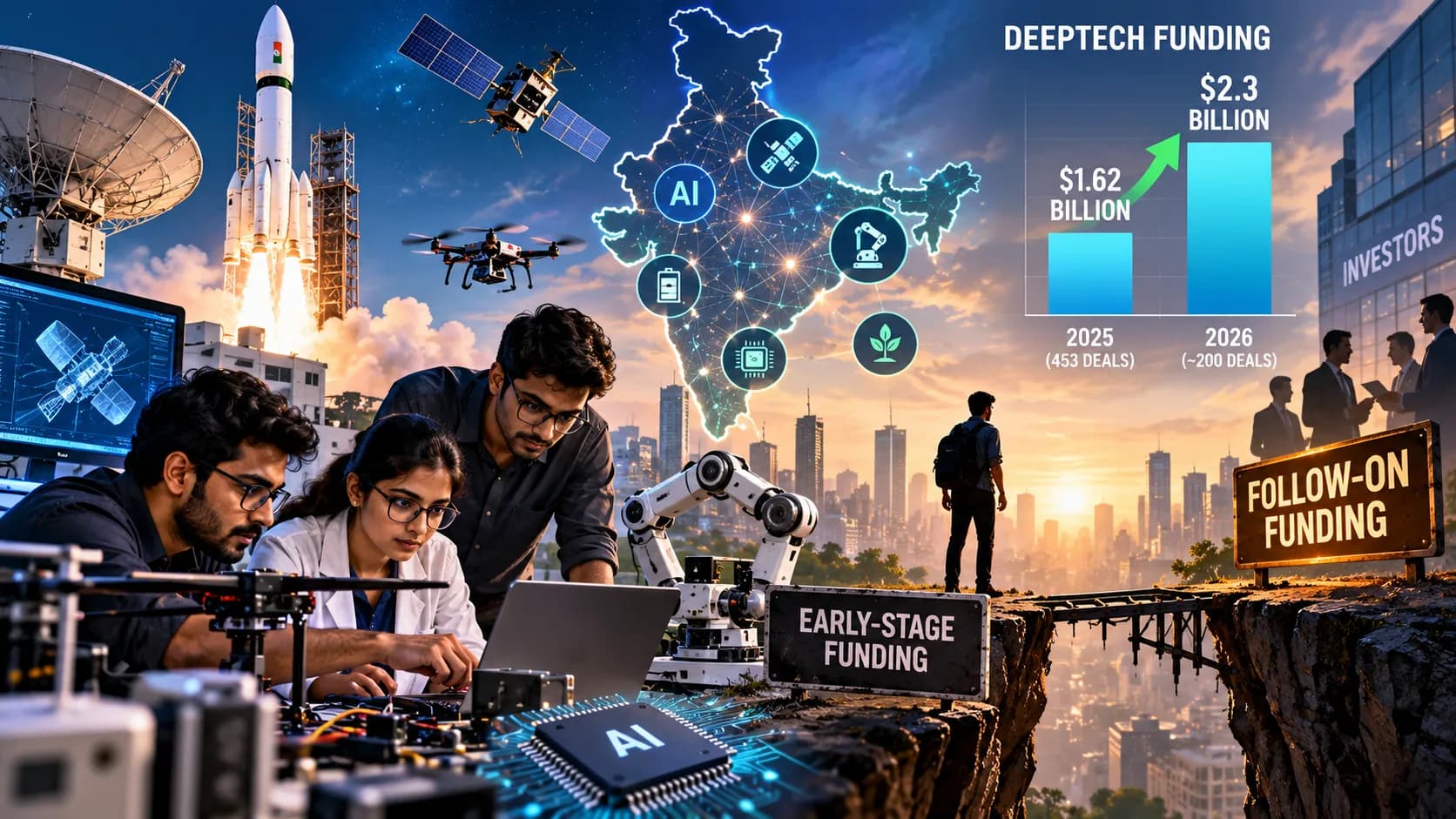
भारत के deeptech ecosystem में एक महत्वपूर्ण बदलाव दिखाई दे रहा है। Artificial intelligence, space technology, defence, robotics, advanced manufacturing, battery technology और semiconductor जैसे क्षेत्रों में startups अब केवल प्रयोगशाला या prototype तक सीमित नहीं हैं। कुछ कंपनियां revenue और commercial scale की ओर बढ़ रही हैं।
इस बदलाव के साथ निवेश भी बढ़ा है। Tracxn के आंकड़ों का हवाला देते हुए Mint ने बताया कि 2026 में अब तक भारतीय deeptech startups ने करीब 200 deals में $2.3 billion जुटाए हैं, जबकि पूरे 2025 में 453 deals के जरिए $1.62 billion जुटाए गए थे। यानी deal count कम रहने के बावजूद औसतन बड़े funding rounds दिखाई दे रहे हैं।
लेकिन इस तेजी के पीछे एक structural problem अभी भी मौजूद है: follow-on या growth-stage capital।
कई deeptech startups उस स्थिति में पहुंच रहे हैं जहां उन्हें early-stage VC से मिलने वाले छोटे cheque से कहीं ज्यादा पूंजी चाहिए, लेकिन traditional growth investors के metrics पर उनका business अभी आसानी से fit नहीं बैठता।
Funding बढ़ी, बड़े Cheques भी आने लगे
2026 के funding data में बदलाव केवल कुल रकम तक सीमित नहीं है।
Venture Intelligence data का हवाला देते हुए Mint ने बताया कि इस साल की top 10 deeptech deals में कम से कम छह rounds $30 million या उससे अधिक के रहे हैं।
इसमें कई notable transactions शामिल हैं।
Skyroot Aerospace ने $60 million का round पूरा किया और मई में $1.1 billion valuation के साथ भारत का पहला spacetech unicorn बना। Sarvam के $300 million Series B के दूसरे tranche में Gaja ने लगभग ₹95 करोड़ का cheque लगाया। Ethereal Machines ने $29 million और Exponent Energy ने $21 million जुटाए।
इसी महीने भारतीय space-tech startup Pixxel ने $100 million Series C raise किया। Reuters के मुताबिक Temasek और Seraphim Space Investment Trust ने round lead किया और इससे Pixxel की कुल funding $195 million तक पहुंच गई।
ये transactions दिखाते हैं कि भारत में deeptech के लिए बड़े cheques अब असामान्य नहीं रहे।
लेकिन ये पूरे ecosystem की तस्वीर नहीं बताते।
असली चुनौती: Early Stage के बाद क्या?
Deeptech startup का funding journey सामान्य software startup से अलग हो सकता है।
SaaS या consumer internet business में investors revenue growth, customer acquisition, retention और unit economics जैसे relatively familiar metrics का इस्तेमाल कर सकते हैं।
लेकिन space launch systems, robotics, defence hardware, advanced batteries, biotechnology या precision manufacturing में product development और commercial deployment में वर्षों लग सकते हैं।
इस दौरान startup को substantial capital चाहिए, जबकि conventional product-market-fit metrics अभी पूरी तरह दिखाई नहीं देते।
यही वह जगह है जहां funding gap पैदा हो सकता है।
Airbound का उदाहरण
Drone logistics startup Airbound ने हाल में $37 million Series A raise किया। Round को Greenoaks ने lead किया, जबकि DoorDash, Lightspeed और दूसरे investors ने भी हिस्सा लिया।
Founder और CEO Naman Pushp ने Mint को बताया कि company ने external investors की तरफ जाने से पहले domestic options तलाशे थे।
उनके मुताबिक एक भारतीय fund में company growth और early-stage teams के बीच फंस गई।
Growth team के लिए business traditional growth metrics पर evaluate करना मुश्किल था, जबकि early-stage team सामान्यतः $10 million या उससे छोटे cheques करती थी और करीब $30 million का cheque उसके mandate के लिए बड़ा था।
यह उदाहरण deeptech funding के उस “awkward middle” को समझाता है जिसमें technology शुरुआती stage से आगे निकल चुकी होती है, लेकिन traditional growth-capital framework में अभी पूरी तरह फिट नहीं होती।
Growth Investors के लिए Deeptech को Evaluate करना मुश्किल क्यों?
समस्या केवल investors की willingness की नहीं, बल्कि underwriting capability की भी है।
Fundamentum Frontier Advisors के general partner Debraj Banerjee ने Mint से कहा कि कुछ fund managers के लिए SaaS-oriented investment framework से deeptech mindset की ओर जाना मुश्किल हो रहा है।
उनका तर्क है कि अगर deeptech company को SaaS business के समान metrics से देखा जाएगा तो ऐसे investments करना मुश्किल होगा।
Deeptech में investor को एक साथ कई तरह के risks समझने पड़ सकते हैं:
Technology वास्तव में commercial scale पर काम करेगी या नहीं
Manufacturing cost कितनी तेजी से कम हो सकती है
Customer adoption में कितना समय लगेगा
Regulatory approvals कब मिलेंगे
बड़े-scale production के लिए कितनी पूंजी चाहिए
Intellectual property कितनी defensible है
Global competitors के मुकाबले technology कितनी मजबूत है
इसी वजह से promising technology होना और growth-stage funding के लिए investable company बनना हमेशा एक ही बात नहीं होती।
Generalist Funds भी Deeptech की तरफ आ रहे हैं
एक सकारात्मक बदलाव यह है कि deeptech अब केवल specialist venture funds का क्षेत्र नहीं रह गया है।
Playbook Partners, Gaja Capital, Avataar Ventures और 360 ONE जैसे broader investment platforms ने deeptech या frontier-tech transactions में भाग लिया है।
Playbook Partners का $250 million maiden fund लगभग 50% capital frontier technology और AI-native businesses में allocate करने की योजना रखता है, जिसमें defence, precision manufacturing, healthcare और battery storage जैसे क्षेत्र शामिल हैं।
लेकिन Playbook के managing director Dushyant Singh ने स्पष्ट किया कि fund ऐसे risks चाहता है जिन्हें वह effectively underwrite कर सके। कई दिशाओं में एक साथ uncertainty होने पर investor company से बाद में लौटने को कह सकता है।
इससे पता चलता है कि capital pool बढ़ना अपने-आप funding accessibility की समस्या खत्म नहीं करता।
Government भी Funding Gap को Target कर रही है
Private capital के साथ केंद्र सरकार ने भी deeptech और early-growth funding को policy priority बनाया है।
फरवरी 2026 में Union Cabinet ने Startup India Fund of Funds 2.0 को ₹10,000 करोड़ corpus के साथ मंजूरी दी। अप्रैल में सरकार ने scheme को formally notify किया।
सरकार के मुताबिक FoF 2.0 का उद्देश्य venture और growth capital mobilise करना है और इसके priority segments में शामिल हैं:
deeptech startups, early-growth-stage startups, technology-driven innovative manufacturing और दूसरे startup-focused investment funds।
यह fund सीधे प्रत्येक startup में पैसा लगाने के बजाय eligible SEBI-registered Alternative Investment Funds के जरिए capital mobilise करेगा। SIDBI इसकी implementation agencies में शामिल है।
यह distinction महत्वपूर्ण है क्योंकि ₹10,000 करोड़ को सीधे startups को मिलने वाली grant या तत्काल investment नहीं समझना चाहिए।
पहले Fund of Funds से कितना Capital आया?
सरकारी आंकड़े बताते हैं कि पहले Startup Fund of Funds ने private-capital ecosystem में substantial deployment catalyse किया।
PIB के अनुसार पहले ₹10,000 करोड़ corpus को 145 Alternative Investment Funds के लिए commit किया गया था।
इन supported AIFs ने 1,370 से अधिक startups में ₹25,500 करोड़ से ज्यादा निवेश किया। Investments AI, robotics, automotive, clean tech, manufacturing, space technology और biotechnology सहित कई क्षेत्रों में हुए।
FoF 2.0 में deeptech को explicitly priority देने से यह संकेत मिलता है कि सरकार long-duration और high-risk technology development के funding challenge को policy level पर address करना चाहती है।
Private Deeptech Capital Base भी हो रहा बड़ा
Private investors की collective activity भी बढ़ रही है।
India Deep Tech Alliance के सदस्यों ने अपने पहले साल में 56 deeptech startups में लगभग ₹2,170 करोड़ deploy किए हैं। Financial Express के मुताबिक इसमें AI और applications में ₹639 करोड़, quantum और space सहित deeptech segments में ₹649 करोड़, energy में ₹655 करोड़ और biotech/pharma में ₹189 करोड़ शामिल हैं।
ये investments individual alliance members ने independently किए हैं।
इसलिए ₹2,170 करोड़ को किसी एक IDTA fund द्वारा deploy की गई राशि समझना सही नहीं होगा।
Deeptech में केवल Funding ही समस्या नहीं
Deeptech ecosystem को केवल venture capital के नजरिए से देखने पर तस्वीर अधूरी रह जाती है।
एक startup laboratory prototype बनाने में सफल हो सकता है, लेकिन commercial product बनाने के लिए उसे manufacturing infrastructure, testing facilities, engineering support, certification और enterprise customers की जरूरत पड़ सकती है।
इसी commercialization gap को address करने के लिए L&T Technology Services का FARM programme 12 deeptech startups के साथ काम कर रहा है।
Financial Express के मुताबिक programme robotics, healthtech, AI और medtech जैसी technologies में startups को engineering support, labs और enterprise customers तक पहुंच देकर Technology Readiness Level 4–5 से TRL 8 के करीब पहुंचाने पर केंद्रित है।
यह funding से अलग लेकिन उतना ही महत्वपूर्ण bottleneck दिखाता है: technology को prototype से commercially deployable product तक पहुंचाना।
Geopolitics ने Deeptech को क्यों बनाया ज्यादा महत्वपूर्ण?
Deeptech में investor interest बढ़ने के पीछे commercial opportunity के साथ strategic considerations भी हैं।
Global supply-chain disruptions और technology sovereignty पर बढ़ते focus ने aerospace, defence, semiconductors और advanced manufacturing जैसे क्षेत्रों में domestic capability का महत्व बढ़ाया है।
Mint की रिपोर्ट के अनुसार industry investors इसे homegrown technology के लिए “sovereignty premium” के रूप में देख रहे हैं। इसके साथ AI infrastructure और compute investment cycle ने भी frontier technologies में capital interest बढ़ाया है।
इसका मतलब यह नहीं कि हर deeptech startup strategic importance के कारण fundable हो जाएगा।
लेकिन domestic technology ownership अब investors और policymakers—दोनों की decision-making में ज्यादा महत्वपूर्ण factor बन रही है।
$2.3 Billion Funding को कैसे पढ़ना चाहिए?
पहली नजर में 2026 के आंकड़े बेहद मजबूत दिखाई देते हैं:
2025: $1.62 billion — 453 deals
2026 अब तक: $2.3 billion — लगभग 200 deals.
लेकिन इन आंकड़ों से एक दूसरा trend भी निकलता है।
Funding value बढ़ने और deal count घटने का अर्थ है कि capital कुछ बड़े rounds की ओर ज्यादा concentrated हो सकती है।
इसलिए ecosystem की health केवल total funding से तय नहीं की जा सकती।
अधिक महत्वपूर्ण सवाल यह है कि क्या promising early-stage deeptech companies के लिए Series B, Series C और उससे आगे का domestic capital pipeline लगातार उपलब्ध हो रहा है।
यही आने वाले समय में भारत के deeptech ecosystem की असली परीक्षा होगी।
आगे किन संकेतों पर नजर रखनी चाहिए?
2026 के शुरुआती संकेत बताते हैं कि capital availability बेहतर हो रही है, लेकिन funding architecture अभी विकसित हो रहा है।
अगले चरण में तीन developments खास तौर पर महत्वपूर्ण होंगे: domestic growth funds वास्तव में कितनी deeptech investments deploy करते हैं; FoF 2.0 जैसे government-backed mechanisms private capital को कितना mobilise करते हैं; और कितने startups prototype तथा pilot stage से निकलकर sustainable commercial revenue तक पहुंचते हैं।
Mint से बातचीत करने वाले industry insiders का अनुमान था कि बढ़ी हुई investor interest को व्यापक deployments में बदलने में अभी छह से 12 महीने लग सकते हैं। यह industry participants का outlook है, निश्चित forecast नहीं।
निष्कर्ष
भारत का deeptech ecosystem अब केवल “potential” की कहानी नहीं है।
$2.3 billion की 2026 funding, Pixxel जैसे $100 million rounds, Skyroot की unicorn valuation, specialist और generalist investors की बढ़ती भागीदारी तथा ₹10,000 करोड़ का Startup India FoF 2.0—ये सभी संकेत बताते हैं कि sector के लिए capital pool और institutional support बढ़ रहा है।
लेकिन ecosystem का अगला challenge ज्यादा कठिन है।
भारत को केवल deeptech startups शुरू करने के लिए capital नहीं, बल्कि उन्हें research से product, prototype से commercial deployment और early-stage funding से growth capital तक पहुंचाने वाली लगातार financing chain की जरूरत है।
2026 के आंकड़े बताते हैं कि इस दिशा में बदलाव शुरू हो चुका है। यह funding gap कितनी तेजी से बंद होता है, वही तय करेगा कि भारत की बढ़ती deeptech pipeline में से कितनी कंपनियां global scale तक पहुंच पाती हैं।
Sources
मुख्य रिपोर्ट: Mint — India’s deeptech boom puts growth investors to the test। इसमें Tracxn और Venture Intelligence data के साथ investors और founders के interviews शामिल हैं। mint
सरकारी funding context: Press Information Bureau — Startup India Fund of Funds 2.0। Government notification के मुताबिक scheme का corpus ₹10,000 करोड़ है और deeptech तथा early-growth startups इसके priority areas में हैं। Press Information Bureau
Recent ecosystem context में Reuters की Pixxel funding report और Financial Express की India Deep Tech Alliance तथा LTTS commercialization reports भी शामिल हैं।